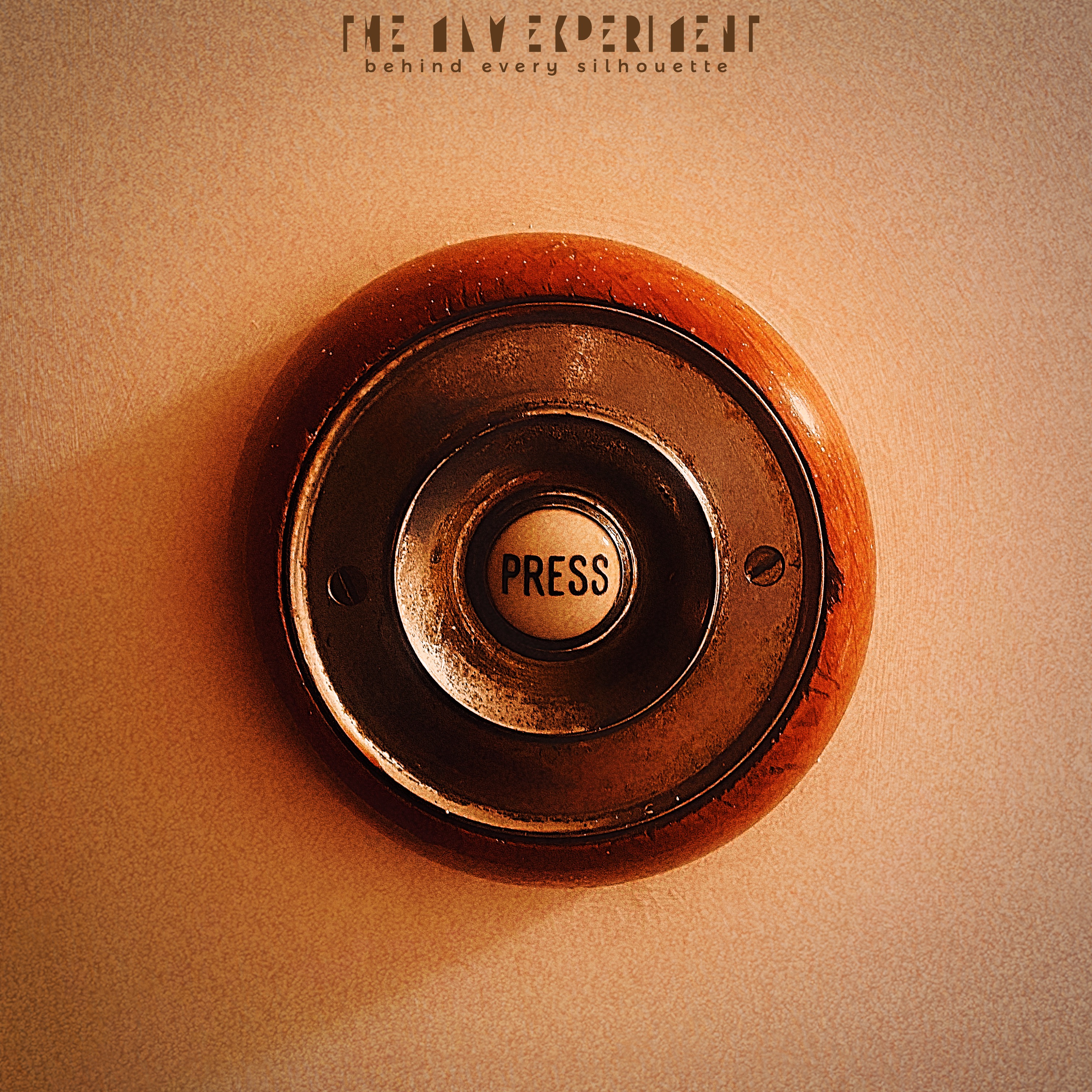
The MAW Experiment is a Singer, songwriter, electronic music producer from London, with music spanning a wide range of genres including electronica, indie, pop, ambient and soundtrack-like soundscapes. He first appeared on my radar when I was participating as a judge in last year’s Lights and Lines Album Writing Contest. At the time, I was immediately struck by the production value on the tracks I was hearing—incredibly sharp synth pop with strong beats and thoughtful lyrics. It was no wonder, then, that the MAW Experiment was awarded the label’s “One to Watch” prize at the conclusion of the contest for tracks that ultimately became the album titled Idiolect. More recently, the MAW Experiment has released an EP titled Behind Every Silhouette, so I thought it might be a good time to catch up…
I see that the songwriting and production credits on your tracks list “M. Wilkins.” Is it safe to assume that’s the “M” and “W” in “MAW”?
You assume correctly.
Are you okay with sharing what the “M” and “A” stand for?
So, MAW is simply my initials. I’d played around with various names and ideas but nothing seemed to stick and I had never wanted to use my own name as an artist. I played around with just MAW for a little while but once it became clear to me what I was going to try and do, the experiment part seemed to fit nicely.
Which leaves us with “Experiment.” I’m curious as to whether it refers solely to your music or if it might speak to existential concerns. Is your life itself the experiment?
I go through existential concerns almost on a weekly basis. But musically, it has another fairly simple explanation.
I’d written music on guitar, mostly acoustic, for a number of years and initially that was fun, playing gigs, creating these 2-3 min indie folk songs but the truth is I hadn’t released music in that style of even played live for about 2 years going into that first COVID lockdown.
I work in healthcare so I knew the pandemic wasn’t going away quickly and I made a decision to just try and fill some of the blank spaces in time with doing something creative. I’d used garage band a few times, but I’d never played keys, never arranged all the layers of a song – drums, bass, lead etc. – never mixed or mastered anything and when I started playing around it was purely for my own curiosity – what MIGHT it sound like – and my set up was a Mac and me so I had no equipment. I
So, the whole thing was an experiment from the very start and in truth it could have very quickly been binned because even though I had a few ideas floating around, they were frankly, a bit shit, and after a few months I had nothing worthy of releasing or even playing loud in my own flat!
And then I randomly suggested to a friend, Joff from Cross Wires that I remix a track from their album. And I had never remixed anything before, but I fancied giving a go and it was actually the best thing I could have done. I turned this 3 min indie punk tune into a sprawling, loud, big beat basted child of the chemical brothers that ebbed and flowed for something like 7 minutes. It got played on a National radio station in the UK and it was really well received – but more importantly for me, it taught me what I needed to know about the process and the approach I needed to start taking and that just took the shackles off.
In the next 3 weeks I wrote 14 songs, 10 of which would become the first album ‘The Slow Burn’ – but that whole album, and everything since probably doesn’t happen without that remix and the guys at Cross Wires being so accommodating with how I ripped up their song!
Focusing on the music, what makes it an experiment as opposed to a project, for example?
Experimentation is the project.
There are no rules, it’s an open playing field and whatever happens, happens.
I know some people like a project and say it’s going to ‘ABC’ – but that’s somewhat restrictive in the way I want to work. I like the idea of throwing the cards up in the air and where they fall is good enough. I never sit down and thing ‘today, today I will write a synth pop song’ or a dance track or whatever it is, on any given day a song might be all of those things and none of those things.
My influences are so varied, that I want to be able to feel the freedom to not be defined by a genre or sound. I have no preconceptions about what i do is or isn’t .
Even with the album writing club, I didn’t really have a plan it just took its own shape and form and ended up being something I was pretty pleased with.

During the Lights and Lines album-writing contest, I recall you mentioning that much of the music you had previously written was instrumental but that you wanted to start writing lyrics. How has that element of the experiment been going for you?
When I started, the idea for me was to not sing on anything, I wanted to just make music, and frankly, I didn’t have a lot to say or maybe it was a case of I didn’t know how to say it.
But I had written songs with lyrics and vocals previously, and over time as I found my feet sound wise it became more natural to want to sing and add vocals to the tracks even though it also meant learning a new way of singing because the style of music required me to sing differently to when I sang holding a guitar on stage and so that was fun finding my voice in that way again.
‘idiolect’ – the album I made for the Lights and Lines contest – that album title actually means ‘The speech habits peculiar to a particular person’ and because it was the first thing I had put my voice to in years, the title felt appropriate.
Now that I’m writing ‘songs’ again its working out nicely – it doesn’t mean every track gets lyrics or a vocal but its more options on the table to be creative which can only be a good thing.
One of the songs that really endeared your music to me was “Home,” particularly the line about home-made Star Wars toys. Can you talk a little bit about the memory that inspired that line?
I’m glad that song connected. It’s one of my favourites from that album.
So, growing up in the 80’s we were a family from a very working-class town and we were lucky that our parents worked so hard to give us everything we could have ever wanted – even though I’d say we had less than a lot of other kids.
One thing we couldn’t get because they were never available or on sale in this country were certain Star Wars toys; we owned X-Wings and a Millennium Falcon etc but we didn’t have Y-Wing or any of those things and so, my dad just made them.
Out of wood, plastic, mental. painted them. it was just my dad in his element. Using his hands, building something out of the spare materials he had in his shed. So that was the memory that inspired that line. The number 76 is referenced in that song too as it was our front door number.
How do you think growing up in that era influenced your music?
I’m not sure it’s had a direct influence really, there were some great bands and some great songs in that period, but I wasn’t a teenager until 1990 and so the 90’s really shaped a lot of my musical taste but as you get older I think you realise just how good some of the stuff in the 80’s was – its a decade that seems to get a bit of negativity aimed toward it, but you can’t argue with the likes of Tears For Fears, Talk Talk, The Smiths, REM, New order, The Cure, Eurythmics, Sonic Youth, Prince etc
I also recall that you talked a bit about adopting “healing” as the theme of Idiolect. Can you talk a little bit about that?
I lost both or my parents to rare cancers in the space of 5 years.
I’d written one song on an acoustic guitars called ‘Muddy Waters’ after my dad passed – which is about drinking Ales with my dad – but I just never gone to that place in my music and so when I started writing those songs for the album writing club, 3 of the first 4 were all centred on memories connected to that loss and I realised that just putting these words in paper and recording these vocals was an act of healing that it was healing me and allowing me to express feelings and thoughts that I guess I’d kept inside for a long time.
I wrote ‘I Can’t Lie’ about my sister , the line ‘I can’t lie I will always want to try and call you’ was about how she would talk to my mum on the phone every night and there had been this enormous hole in her world since mum died and I wanted to write something that said ‘I see that, I hear you, I am here’ and I wanted to share the healing – if at all possible.
Every track on that album is directly related to a feeling and a memory that i hadn’t truly shared or talked about before. So that record was really therapeutic for me. And those songs could have been depressing as hell but I think sonically they are full of hope and light and that was an important part of that experience. To not get trapped in the darkness.
What theme or themes are you working with on the new EP?
Honestly, there isn’t really a theme, other than the approach was to make happy sounding songs, they are quite 80’s sounding actually, but I just think it’s an EP of 4 fun tracks.
Any other projects on the horizon?
I have another 4 track EP on the way in a few weeks called ‘In The Dead Of Night’ which I think is pretty good – its sonically very different to ‘Behind Every Silhouette’…I’m really pleased with it and I’m also finishing up a new album which will be the follow up proper to ‘Idiolect’ – that will most likely be sometime in May.
Thanks for taking the time to talk to me!
4 responses to “Existential Concerns: An Interview with the MAW Experiment”
I recollect you playin this on the MAW Experiment and mentioning the songwriting exposition on the TWEETCORE radio hour! The additional tracks put here are a cool discovery for me. Love the artwork too.
Definitely cool stuff… I know he spent a lot of time getting the art right!
His music is really fascinating, with a variety of aural textures, punctuated by moments of delicate beauty. “Home” and “I Can’t Lie” are particularly lovely. Interestingly, to my ears, his vocals at times sound like a blend of Rufus Wainwright’s and yours!
Agreed! And thanks for mentioning my vocals in the same sentence as Rufus Wainwritght’s!