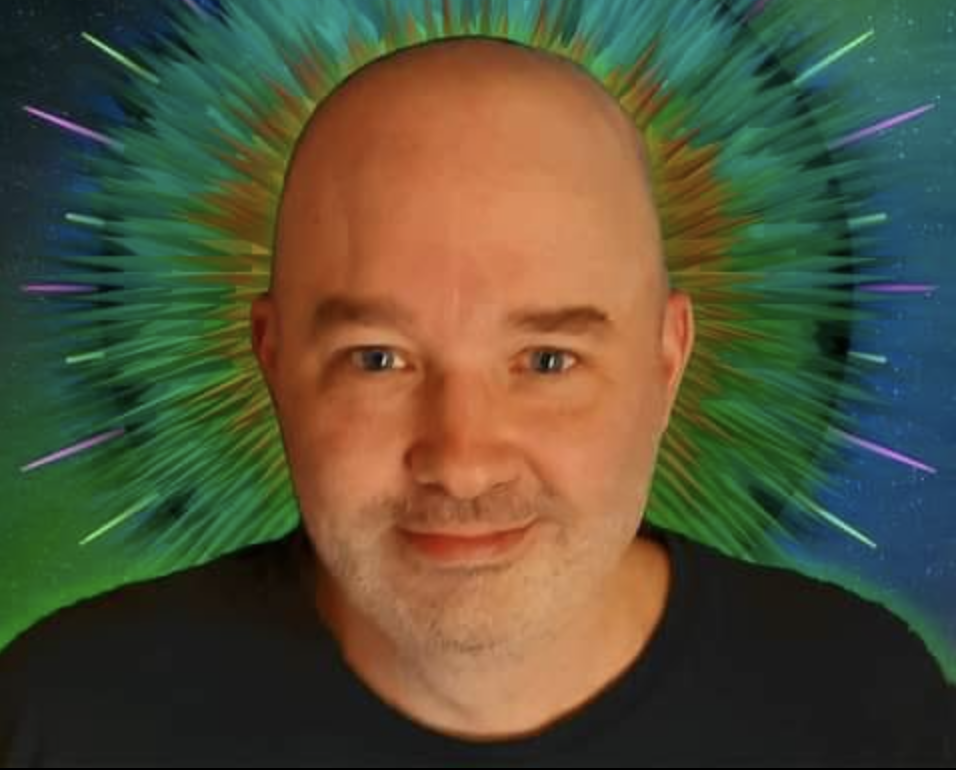
I’ve been a fan of James Slattery’s work for a while. Primarily known (by me, anyway) for his work of one half of Slatts and Coker, he’s recently begun working with John Serrano (and Josh Coker) on a project called the Castillion. James is also very generous with production advice on social media, and his online presence has recently taken on a distinctly political bent. Curious to learn more, I dropped him a line…
I’m mainly familiar with you via Slatts and Coker, but I know you’re involved in a few different projects at this point, including Chronic Ion and the Castillion. Can you say a few words bout each? What do they have in common, and what makes them different from each other?
Chronic Ion is my solo artist name and those releases vary in genre from synthwave, to electronic, to rock, to a spoken word concept album with music and sound effects. I typically just write what comes to mind and if I like it, it gets released. The Slatts and Coker project started in 2020 a few months before covid first hit. Josh Coker and I began collaborating over the internet while I was living in Missouri and Josh was living in Arkansas. After a few months of phone conversations, texts, and emails I moved to Arkansas to live with Josh, his wife, and his son so Josh and I could pursue music more seriously. I’m happy to say we’ve become very close friends, and I am now godfather to Josh’s seven year old son. After our eleven songs, Josh was ready to give up on music because it just wasn’t going anywhere… until I introduced him to John Serrano. John and I were fans of each other’s music and had already started collaborating on the Chronic Ion song Adrenaline Fire. Josh saw a kindred spirit in John; someone who had also been chewed up and spit out of the music industry and a unique talent. We all started chatting together and The Castillion was born. From the beginning we set out to create a progressive rock concept album that will stand the test of time. Josh is taking the lead on the music and song structure and he has created something truly special, sometimes using up to eight guitar tracks in unison. John Serrano handles the vocals and is one of the best singers I’ve ever heard, let alone worked with. He has a unique ability to find exactly what is needed when working with complex progressive music, and that has taken this project to a place that I could never have dreamed of. As far as similarities go, The Castillion may seem somewhat related to the Slatts and Coker stuff because Josh is using the same technique of recording several guitar tracks, and both projects fall into the general category of progressive rock. But among Chronic Ion, Slatts and Coker, and the Castillion, there’s only three universal things that I can think of: it’s all progressive music in some form, I play on all three, and I am producing and engineering all three.

How is working with other person like you do in Slatts and Coker different from working in a trio like the Castillion?
The big difference is that Josh Coker and I are roommates, so collaboration between just the two of us is often quicker and a bit more simplified. For example, if we are trying to figure out a section of a song we can sit down in front of the project together, sift through it, and talk it out. With The Castillion most of our communication with John Serrano happens via google chat, so conversations often don’t occur in real time. We have a massive time difference because we’re in Arkansas, USA and John is in Spain. It can also be difficult to explain specific details of a project through texts, which is one of the reasons we now do a video chat with John once a week.
You mentioned on Threads a little while back that you use Songtradr for distribution. What do they offer that other distribution services may not? What has your experience with them been like?
Songtradr has been excellent for us. One of the main complaints I hear about other distributors is that their customer service is lacking. Songtradr has professionally handled every issue we’ve had: replacing artwork on a previous release, correcting credits, taking down releases, and explaining some of the intricacies of how to use our production company (Endless Audiofade Productions). They offer distribution, sync opportunities, and monetization opportunities for just $49 a year. Songtradr came recommended by Doug Driesel, a producer friend of ours that has been in the business for decades.

You’ve traveled across the continental United States and back again. What was that experience like? How has it influenced your music or world outlook?
The United States has so many beautiful, awe inspiring things to see. Driving alone across the country without a plan was very freeing and gave me a ton of confidence that I could do anything if I put my mind to it. I literally packed everything I owned into my car and set out to find my way, sleeping at campgrounds in a tent if I didn’t have family or friends in the area. Throughout my life I have also lived in many different situations with people of all backgrounds and it has taught me that people are, generally speaking, good and kind. The basic necessities motivate all of us: food, water, shelter, security, love and happiness. These commonalities bind us together as human beings. It’s made me realize that forming a connection with someone is easy and often times is a simple matter of being compassionate and respectful.
Your Threads bio describes you as both a musician and audio engineer. What was your path to the latter?
From the first day of recording, audio production was something I knew I was going to have to learn if I hoped to do anything with music. I started by using my G.I. Bill to enroll in college at NCCC (Niagara County Community College) and obtaining a two year degree in Science/Music while becoming Pro Tools certified. While in school I was very lucky to meet Andrew Catland, a fellow student who sold me Pro Tools and an Mbox for $100… an incredibly low price. This was very fortunate for me because my budget was minimal, but having those two things was essential. After that, it took me about ten years of experimentation and learning before I felt like I really knew and understood what I was doing as an audio engineer. I have never been inside of an actual recording studio, so my process consisted of finding tips on the internet combined with a lot of trial and error. But I believe it has paid off; I am quite happy with the quality of my production at this point.

What’s your advice to musicians who are just beginning to record their own music?
I don’t know if it was ever truly easy to be an artist, but nowadays it’s a tough business to be in. The market is flooded with 100,000 new songs everyday and AI music is quickly becoming indistinguishable from real music. For artists just starting out, first and foremost I would say make sure your production is on point. Whether you do it yourself or pay a professional, the production has to be good when your song is a drop of water in an ocean of music. Nowadays, there really is no right way to do it but the production does need to meet a certain threshold of quality if you hope to reach casual listeners. I would also say that when you’re writing music don’t be afraid to follow your instincts and be original; it will help separate you from other artists. You will also enjoy making and listening to your own music a lot more, which I think is important. There is a certain immeasurable magic that comes through when an artist puts their heart and soul into something they enjoyed creating.
You’ve taken a very strong stance against AI in art and music—one to which I’m highly sympathetic. What’s behind your thinking?
I think AI music is dangerous because soon most casual listeners will not be able to tell the difference between AI and real music, and that will devalue music even further than it already is. Musicians put a lot of time, money, and effort into creating their art. When people or streaming services can create music without any time, money, or effort using AI, then artists themselves will begin to fade into oblivion in favor of a cheaper, soulless alternative. Real art needs to be protected and promoted if we want artists to continue making meaningful art that changes our lives.
I’ve also noticed that your social media posts have become pointedly political. Can you talk about that?
For most of my life I have been apolitical, but this year is different. A convicted felon who has previously not accepted the results of a free and fair election, tried to openly overturn those results, has stated that he wants to end the constitution and end the department of education is running for president. To me it’s incredible that he’s even allowed to run and people are actually going to vote for him, but here we are. I couldn’t sit idly by and watch my country go down that dangerous road because I fear there may be no coming back from that. Since I’ve started paying close attention to the candidates I’ve become a huge supporter of Kamala Harris and Tim Walz. Their positive talks about bringing up the middle class, health care for all, reinstating Roe v Wade, and tackling price gouging are refreshing. I’m in favor of everything they stand for and I am hopeful they can deliver on those promises and move our country forward in the right direction.
What’s next for you?
I try to live in the moment and be open to opportunities in life and music, so I haven’t thought about the future beyond finishing The Castillion project. I know I want to keep making music with these two incredible musicians (Josh Coker and John Serrano), but where that will take us… who knows? I try not to force anything with art and the best ideas seem to come when we just let them happen.
You must be logged in to post a comment.