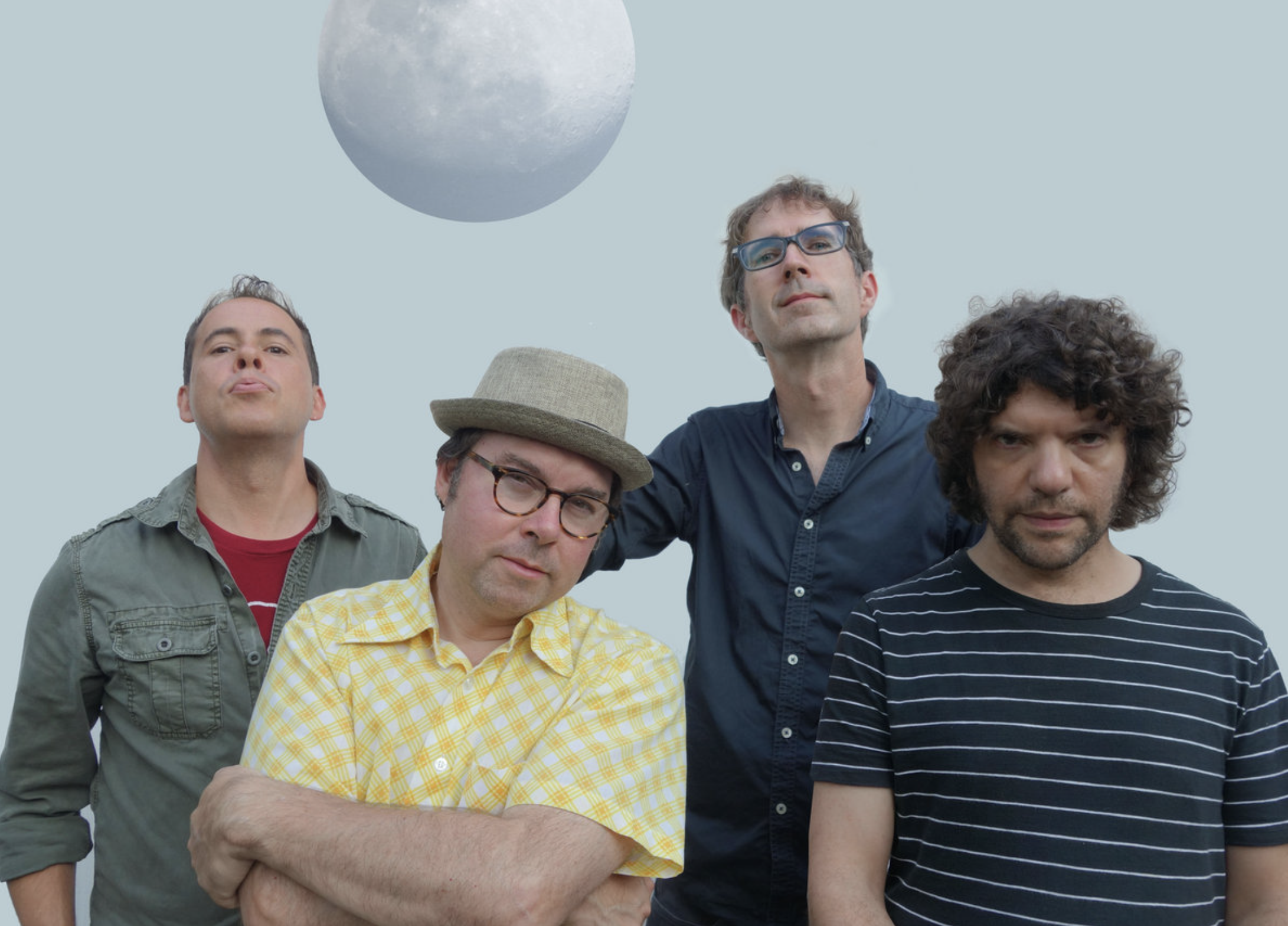
I’ve been a fan of Henning Ohlenbusch for a while. I think it started with his Twitter feed, which I found fun and engaging without trying so hard to be “engaging” like a lot of musicians’ feeds I’ve seen on social media. It wasn’t long before I started listening to his music — including solo work, recordings with his band Gentle Hen, and the children’s music he puts out under the moniker Turkey Andersen. Throughout all of it, Henning comes across as charming, smart, and thoughtful, so when I heard that Gentle Hen was coming out with a new album, I reached out with some questions.
The Gentle Hen Bandcamp bio reads “We love songs and albums.” What is it about albums that you love? What keeps them relevant in a world mostly dominated by streaming and singles?
My brain developed in such a way that I organize and categorize music in albums. Maybe it began simply with laziness. Who wants to get up and lift a needle and put on a new record every three minutes? Or eject and switch out a cassette? My personal musical habits began by taping records that belonged to my older brothers and sometimes my friends. You could buy a pack of ten 90 minute Maxell XLIIs for $10 on sale at Cuomo’s in Salem, NH and they often came with a bonus Metal cassette. On each side of a tape I could fit a whole vinyl album (45 minutes). So two albums per cassette equals 50 cents per album. Maybe it was all about me not having much money to spend. Twenty two albums for 10 dollars. And that’s how I listened, I plopped in a cassette and let it play. I still confuse Murmur and Reckoning because they were back to back. And Piper at the Gates of Dawn and Saucerful of Secrets.
These days, I mostly listen to music in album form, even when streaming, if I’m checking out an artist or listening to one I know inside out, I always do it album by album. This isn’t to say I don’t love mix-tapes and shuffle playlists, I do. But when I really want to dig in, I do it in albums. Maybe they tell a story, maybe they have an arc, maybe it’s just a way to let the overall sound and approach of an artist dig into my subconscious. Maybe the songs are like chapters in a book. And who wants to just read a random chapter?
Your new album is called The Wrong Record, and it consists mainly of songs that were left off previous albums. How did you decide which songs to keep on the previous albums, and what was behind the decisions to leave the songs we’re getting on The Wrong Record off them?
This is a hard one to put into words. I have a sort of abstract idea in my head of the personality of each album and, as it sometimes happens, some of the songs that I had written in that period just don’t seem to fit it. It’s not necessarily that the albums have a defined mood or story or energy, it’s more like there’s some sort of amorphous cloud of something that defines that time period in my head. And those songs don’t help define it.
There’s a clearer explanation for the songs that were left off of The Whole Point of the Trip (sofa so good, it takes a couple words, and nowhere to go but to sleep). When we finished recording the whole collection, it was revealed to me that most of the songs were about traveling, both through space and through time. We were able to put them in an order that told a bit of a story, basically traveling between birth and death. These three misfit songs wouldn’t have contributed to that narrative.
On a more base level, I kind of like albums to be between 25 and 45 minutes long. Too many songs can cause fatigue, and the poor stragglers near the end get overlooked and forgotten.
You’ve described The Wrong Record as akin to a few classic albums of years gone by, like the Who’s Odds and Sods and REM’s Dead Letter Office, whose tracks essentially amount to a collection of misfits. What do you think makes albums like these work or gives them their charm?
I think charm is the right word. Getting to know these one-offs and misplaced songs can reveal a new side of an artist. It’s a little like going to a slumber party and seeing your friends with mussed hair and groggy morning clothes rather than the way they present themselves to the world. There’s a less-guarded more casual feel to many of these collections and when listening you feel a bit closer to the artist.
The songs on The Wrong Record span a decent number of years. The earliest were recorded in 2011, and the most recent, “Talking Backwards,” was recorded earlier this year. What do you think about when you listen to the songs? Do they bring back any memories?
They definitely do bring back memories. I recall specific moments in the recording process, for example when Ken Maiuri sat at the piano and out of nowhere filled in all the blank spaces on the Rumor Mill with such expression and melody and humor. I sat there and squealed inside while watching it unfold. Or how Tony Westcott chimed in his perfectly clean guitar in the middle of Bad Day Done. I remember the feeling in the studio during those sessions in the winter in the woods of New Hampshire, a black bear lumbered through the back yard and busted all the bird feeders.
I’ve gotten to a strange point in my life that for whatever reason, I often no longer remember writing particular songs. And of course the longer back it goes, the less I remember. The songs just start to feel as though they’ve always been there. But I usually have memories of recording them with my friends. Or playing them live. And often I recall that greatest-of-all-moment when I first present a song to the rhythm section of Brian Marchese and Max Germer and I get to experience in real time as they absorb the song, glance at each other, and almost instantly bring it to life, defining dynamics, locking into a groove, suggesting arrangements and approaches. It’s like magic. Those moments I hopefully will never forget. Or even better, hope will never end.
The liner notes on Bandcamp offer some interesting details about the recording sessions. Was someone keeping a journal or did you memorize everything?
My goal is to try to journalize everything, but during a recording session, especially one with my creative and inspired band mates, it’s very difficult to remember to write it all down. But luckily, I found some notebooks with day by day notes. I’m so glad for whatever I remembered to write down.

Speaking of memorizing everything, you released a solo album in October of 2020 called I Want to Memorize Everything. Curiously, that was at the height of the COVID pandemic, a time a lot of people might rather forget. But I feel like there’s something sentimental about a lot of your songs that speaks to a desire to hold on to the past — even memories that might be unpleasant. I’m reminded of a quote from Michael Stipe who once said that REM stood for “Remember Every Moment.” Is there a relationship between memory and song? How are the two intertwined?
The funny thing is that I don’t remember it that way. As much as I focus on time and memory in my writing, I personally have a very poor grasp of when things actually happened. If you hadn’t said, I would have guessed that I Want to Memorize Everything came out in 2019 or even before. I suppose I probably wrote the songs well before the idea of a pandemic was anything other than science fiction. I did make another solo album called The Dream is to Dream and that one absolutely lives in and acknowledges that surreal time of uncertainty.
I’m a nostalgist at heart, raised by chroniclers and shelf-stackers. Since a young age I’ve been trying to freeze time, capture moments, document eras through writing, photography, film, or songs. It’s a problem. I’m working on it. But, yes, ultimately I think of songs as capsules in which to trap moments. And what is that other than memory.
I Want to Memorize Everything was spare in terms of arrangement and production. Was that because of COVID restrictions, or was it more of an aesthetic decision?
That album was spare on purpose but only because of my own inflicted restrictions. I wanted to make a record that reflected a little bit the way I used to do it in my parents’ basement with a 4-track cassette recorder. So I limited myself to 8 tracks or fewer. It’s very difficult for me to do this because there is nothing I enjoy more than adding ideas and sounds to existing music. It took some real effort to fight that urge and to try to make the songs as spare and personal as I could stand. 95% of my songs are written while I’m sitting on the arm of the sofa with an acoustic guitar, and in my mind that is the songs in their true form.
You also record children’s music under the name Turkey Andersen. What inspired you to start writing and record children’s songs, and how did the name Turkey Andersen come to you?
I’ve got a soft spot for goofy, novelty songs. They’re great fun to write, arrange, and sing but they don’t necessarily all fit in with the band or my solo releases so those that I felt might appeal more to the open and imagination-filled heads of kids needed a different outlet. And I love kids and the idea that they might connect to something in the songs. Turkey Andersen is a delightful and roundabout way of saying Henning Ohlenbusch, a bird in front of a family name.
Do you have any other projects in the works?
Always. After the release of The Wrong Record we’ve got another collection of new songs ready to be recorded. My hope is to have another Gentle Hen album out before summer. I’m about halfway through writing enough suitable songs for another solo effort. And the Fawns, for whom I play guitar, is looking to have some releases in 2025 as well. Hopefully, it’ll be a creative and fruitful year.
2 responses to “Mussed Hair and Groggy Morning Clothes: An Interview with Henning Ohlenbusch of Gentle Hen”
Gentle Hen is a great name for a band. I like their music, particularly those bold jangly guitars.
I agree! And Gentle Hen was a band that kept me relatively sane through COVID!