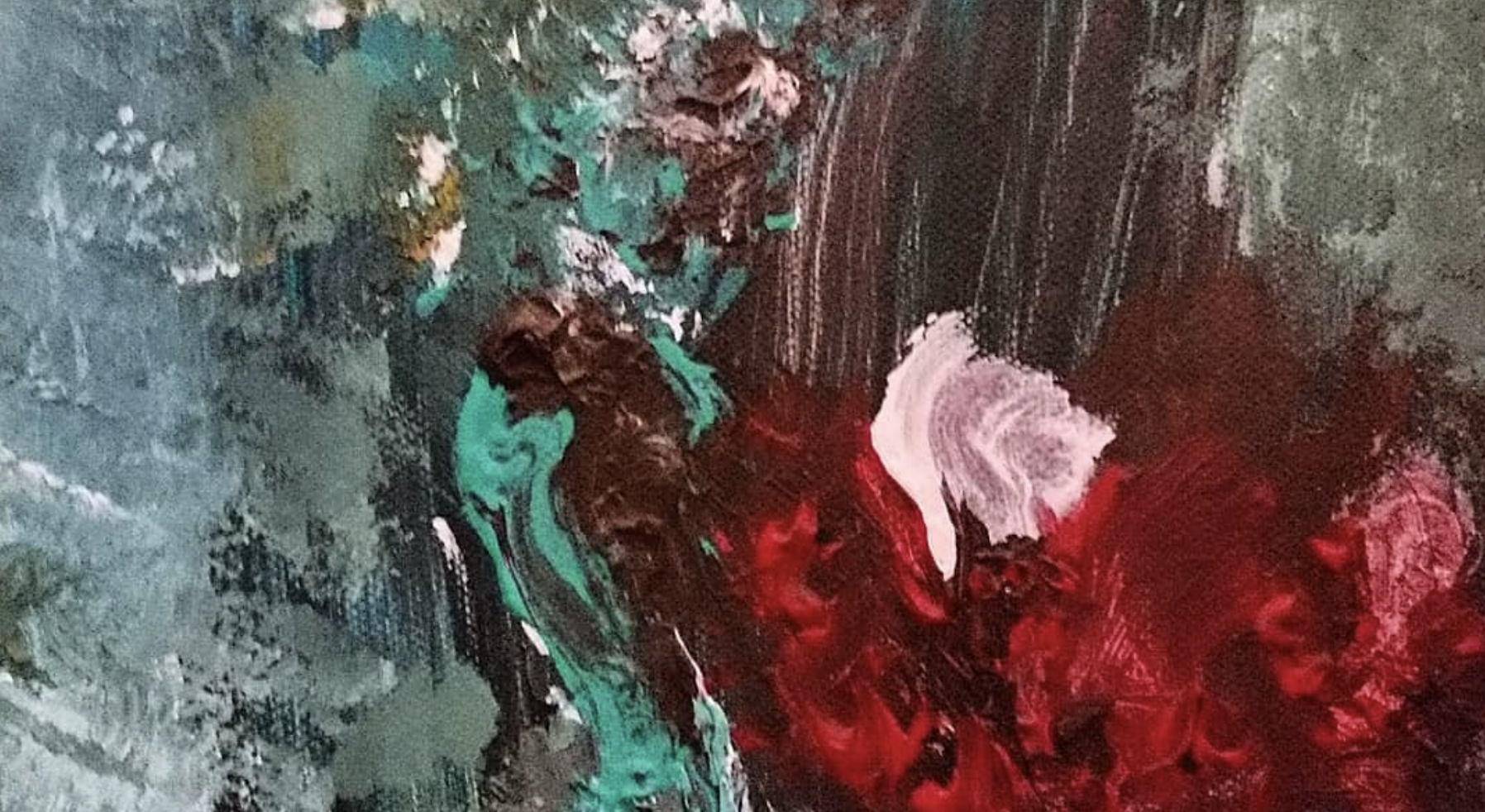
Robin Sandquist has been working on his new album, Ägydius, for twelve years. The title, he explained to me in an email, originates from a medieval monk who lived during the 15th century and establishes a theme meant to be both medieval and sacred. Musically, the album has touches of Indie-pop, 90s slowcore, and a hint of jazz, and Robin took additional inspiration from the notes of a medieval nun. To find out more, I reached out with some questions…
Congratulations on your new album! Can you tell my readers a little bit about it?
This album Ägydius has been a big project of mine which has been in the works for a while. I’ve arranged it and had a hand in every part of the process, with the help of some super talented people. The recording was done between 2023 and 2024 with the finished product being presented in November in 2024 through the record label Sonde Records, a local label based in Malmö, Sweden. Now the vinyls has arrived and I’m very excited to share the music around the world.
The album took twelve years to complete. That’s a long time! Can you talk a little bit about your journey? What was involved in creating the album? Did you face any obstacles? If so, how did you ovecome them?
It’s been an accumulation of a lot different ideas I’ve created since I was very young, and through these twelve years I’ve made songs, both short and long, that I’ve liked quite a lot myself. Going into this project I tried different constellations of my ideas and gradually built a narrative for the album. I actually tried to record an EP eight or so years ago with the following songs on the album – Hem & Vädersol. But I didn’t have the capacity to perform it as I had written it. During the outro for Vädersol I was fixated on playing the piano part in one take and failed after a good take to maintain the form, and instead of saving it in the edit I decided to shelve the whole project. So all these years later I got back to it and laid out a the structure instead of figuring it out as I went along, I got help from Tilda to perform the part – which she managed in one take – and I finally felt happy with the result!
Do any moments from that period stand out for you?
I’ve been a part of a lot of different projects during those years. My previous band Sejd, post-rock outfit from Sweden, released our debut self titled album in 2015 which gained some buzz within the scene. After that we released our sophomore album Ben & Hjärta 2018, which didn’t garner as much attention as we had hoped. We finally released a singel of our first ever written song, Stella in 2020, afterwards we went into a hiatus. Simultaneously I was in other projects. One of them were Celeste 11, which released some music in 2019 and also an EP called Mantra in 2022. Between all of these project I still wrote my own music – and there’s a lot of more ideas ready to be put together for future releases!
Who were some of the musicians you worked with to complete the album, and what did they contribute to it?
After having recorded most of my own stuff I started to record Marcus Karlsson on drums. We did the whole album in one session – which was quite impressive due to that some parts were decided through that recording session. After that I recorded Sebastian Falk on hurdy-gurdy (who also later contributed with glockenspiel), he had recently gotten a new hurdy-gurdy with a lot of extra resonance strings attached – these acoustics really helped bring forward the Swedish-folky I wanted in the album. The next session was with Tilda Björnberg on piano who did a great job performing the piano parts I couldn’t play myself (on songs like I bergbrottet, Efterskalvningar, Hem, Brinnande balen &. Vädersol). Next was Martha who contributed both with vocals and flute (and she also perform bass on our coming live gigs), she managed to sing the Swedish parts even though she’s not a native speaker. After that Klara Mulder sang the rest of the vocals, the combination of our three voices (Robin, Martha, Klara) blended really well together due to our different voice types (Baritone, Mezzo-soprano & Alto). Lastly my two siblings contributed on their separate instruments Tobias Sandquist on cajon and Sofia Sandquist on Cello.
I didn’t do too many edits to the performances overall which I think has helped the album to maintain some sense of rawness in the end product.
You’ve mentioned that the name of the album, Ägydius, originates from a monk who lived in the 15th century. What was that monk known for, and how was his life an inspiration for your music?
I actually don’t remember how I stumbled upon that name. The name was supposed to be the moniker for upcoming releases, but I decided to use my own name instead and have Ägydius as a series of music that was going to be released using new acoustic arrangements and developing my lyrical capacity. It became a good fit with mood I was going for – natural mysticism intertwined with sacred sounds in a modern musical setting.
Hildegard von Bingen was another influence. Who was that?
Hildegard von Bingen was a German nun who lived during the medieval period. She was prominent in a lot of different fields, most known as a composer. Her work was a great inspiration during a period of time when I was looking for sacred music, which was also therapeutic in its own sense to listen to and set a good mood for creative work – painting, which is another medium I’m currently exploring.
Your press release mentions that the album “can provide some kind of catharsis for the faithless and hopeless. How so?
In the same sense that Hildegard’s hymns gave me a sense of comfort I hope that my music can gave that same sensation. I heard early on from fans of my work that they got a strong emotional response when having listened through it – a cathartic experience. My own experience with faith is complicated and my music is also a way going through those themes of faithlessness – not explicably within the lyrics but rather as a mood that I wish to convey.
You’ve also described the album as blending indie-pop, 90s slowcore, and folk. How did you balance all of these elements?
The artist who have inspired me is: Mark Hollis (Talk Talk), Phil Elverum (The Microphones, Mount Eerie), Mark Kozelek (Red House Painters, Sun Kil Moon) and Shugo Tokumaru. All of these have put their mark on some way I write my music. These elements come together in different kinds of ways, some songs use more structure inspired by a blend of some artists and some songs use more elements of other artists. I haven’t written the songs with this in mind, but rather afterwards in reflection I’ve seen how these artists have come through in different ways.
Ester Cavalin provided an illustration for the album cover. Was it based entirely on the music, or did you describe what you were looking for?
Both. We worked together throughout the year 2023 while I was still in the process of composing a lot of the music, so she got a chance to draw and compose her own idea to early previews and create her work in accordance to her overall interpretation of my music. I still had some ideas of the colour scheme and overall theme that presented to her. The blend of the sacred and melancholy in her art really helps set a tone for the music and the end product became something really special!
What’s on the horizon for you?
This spring I’m having two concerts as a part of the release of my vinyls for Ägydius. At Barnens scen 23/4 and at Lilla stan 3/5 in Malmö, Sweden, the second gig will include an exhibition of my own art work. Hopefully more gigs will emerge on the horizon, and maybe some opportunity to play outside of Sweden. I’m also active in another project called Hazel’s House which will release its first EP this year.
2 responses to “A Sense of Comfort: An Interview with Robin Sandquist”
Robin is an interesting and quite creative guy who makes both beautiful music and visual art. Nice interview Marc.
Thanks! I’m glad you enjoyed it!