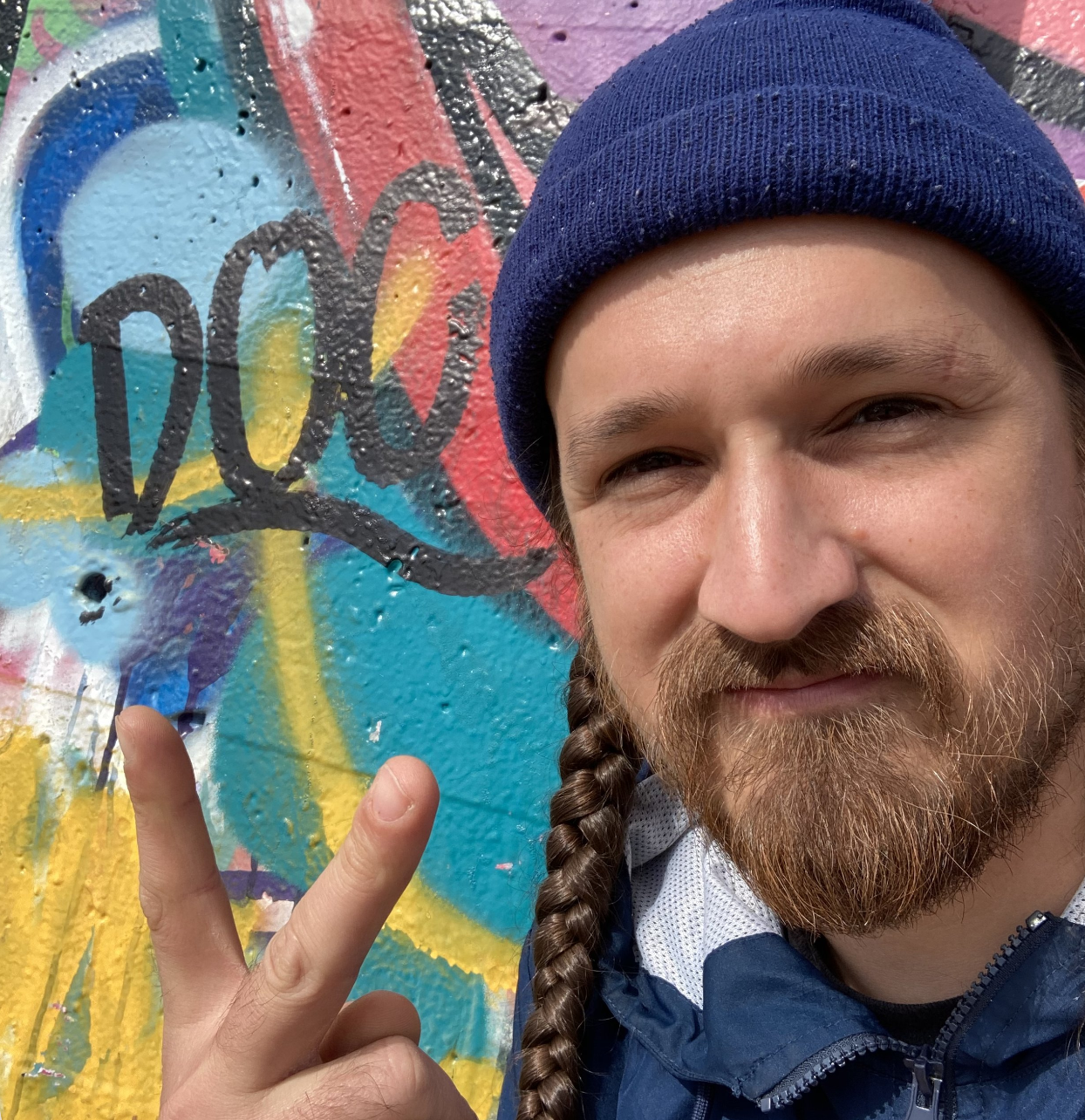
Chris Baglivo dropped me a line shortly after the Obscuritans’ Hardcover Musing Section EP debuted on Bandcamp. He mentioned that he was a music producer in Philadelphia, so I looked him up. Turns out that “Doc Bag” as he’s known has worked with a number of cool bands, including Spirit of the Beehive, Bear vs. Shark, and Algernon Cadwallader. He’s also been recording and touring for over a decade with his band The Superweaks, so I dropped him a line to find out more…
You’ve been playing music professionally since you were fourteen years old! How did you get your start?
At first I had no real interest in being a musician as a kid, but when a friend of mine got a guitar for Christmas and started taking lessons my interest was piqued. After learning every Nirvana song that friend had learned at his lessons he suggested I meet his guitar teacher. I went to a lesson in his guitar teacher’s basement and I soaked up every Rolling Stone song he had to teach me in one day. Flash forward a year and I was playing lead guitar in his cover band. I think it was largely a novelty that this 14 kid was taking solos, but I was out gigging with a bunch of 40 year olds doing all of Keith Richards’ finest licks.
And you graduated from Drexel University’s Music Industry Program in 2010. What did you learn there?
I was in the tech half of the program, so we learned a lot of categorical technical stuff. Identifying microphone types, what cable ends are, etc. The best asset they had was we could book studio time at a handful of the studio facilities at the university and record bands. That’s where the real learning happened. Being able to experiment and record in your own time goes a long way.
Drexel is well-known for its co-op program. What co-ops did you participate in, and how did they prepare you for what you’re doing now—assuming, of course, that they did?
My co-ops were unfortunately a little disappointing! I had one internship at a commercial music studio in NYC where they were supposed to be scoring a film, but the contract fell through right before my co-op started.
So I mostly sat around all summer and cleaned things that needed cleaning, but I did get to play bass on a car commercial song.
My other co-op was at a studio in Mississippi and the owner/producer only allowed me to sit in on sessions once or twice. I mostly sat in the office and had to do his weird bidding when he called upon me.
Once he demanded I trash pick this rusty chair he saw on the side of the road on his way to work. I had to walk down the road, dig it out of a pile of leaves, spend the whole day spraying it and polishing it with rust remover, and it was 100 degree weather in humid Mississippi.
I’m sure you’re not surprised I don’t use much of that knowledge when working on records!
Yeah, I guess there isn’t a whole lot of chair-refurbishing in your current line of work! After studying at Drexel, you founded the now-defunct recording studio Big Mama’s Recording with fellow D.U. grad Evan Bernard before running Jamtown studio with him. How did that move come about, and how are the two studios different?
The ill fate of Big Mama’s is a long and bizarre story involving an infiltrating cult who were covertly charging unhoused people to squat in our space without our knowledge. We pulled out of the building hoping to wait them out and move back in once their whole thing collapsed. Unfortunately the pandemic hit and we never got the chance to move back in.
Luckily Ben Reisman who owns the Maas building next door to the old Big Mama’s location bought another building that he wanted to turn into practice spaces and studios. He invited us to join him on the venture and we jumped at the opportunity.Jamtown’s space is smaller than the sprawling 3000 sq foot warehouse that was Big Mama’s, but it was built to be a studio. Its a controlled and versatile room with no parallel walls and just enough treatment to preserve the natural energy of the room. We’ll always miss Mama’s, but Jamtown has allowed us to make some of the best sounding records of our careers so far.

I get the sense that you and Evan are a team. How do you complement each other?
We really are! We’ve been best buds since college, and earlier in our recording careers we would work on records together. He was more production and big ideas back then and I did more of the technical work of mixing and editing. Now we’ve branched out to be fully versed in all those skills independently but we still run things past each other and build the repertoire of the studio together.
Not to mention that we also have our band The Superweaks together around 12 years running now! We actually just released a new single at the time of me writing this called “Mr. Blindside.”
Additionally we host a podcast called “The Superweaks Superweekly Supercast” together where we interview people who have things to say about Big Mama’s Warehouse and other subjects relating to the music scene.
Who are some acts that you’ve worked with, and what do you bring to the table as a producer?
The acts I’ve worked with I imagine most of your readers will be familiar with are Mannequin Pussy and Spirit of the Beehive. I’ve also done the full discography of the band Courier Club, performed in and produced/recorded/mixed the American Idol contestant fronted band Z by Z, and more recently produced, co-wrote, and recorded the material for the band Pouty’s newest record “Forgot About Me.”
What is evident with all of these acts is my love of pop sensibility and heavy music. Knowing where those two qualities can intersect harmoniously is what can make a rock band reach a wider audience and alternatively make a pop band sound more special than a sterile Bruno Mars knock-off. Evan and I got involved with Mannequin Pussy right when they were transitioning form lo-fi 2-piece to a full fledged rock band. We helped Marissa find her melodic confidence in her voice and its been incredible to watch her grow and dominate since then.
How has the music business changed — particularly with respect to running a studio — since you graduated from Drexel? How do you stay on top of these changes?
We were watching it rapidly change even when we were still going to Drexel! It’s not about juggernaut mega-studios the way it used to be when I fantasized about working at Sigma Sound when I was younger. Also its much less sustainable to have the staff that places did back then. It’s usually just the owners of a studio doing every job from production to social media to accounting. Bad news for us because we are not social media savvy, but good news for us because we exist on a level that’s ideal for the blossoming music scene in Philly.
All that being said, we’re fairly old school about how we approach the business. Word of mouth is still the best thing for us in terms of getting work and being vouched for. If you have unlimited cash you can pay for as many online advertisements as you want these days, but nothing beats people hearing a great record you’ve worked on and telling their friends about it. That being said, YOU who’s reading this now: tell your friends about Jamtown!
You mentioned touring and performing with the band The Superweaks for over a decade. What do you like about being in a band?
Honestly the best thing is the camaraderie of shared experience on the road. There’s nothing like sleeping on the floor and laughing at the dumb crap your best buds say as you drift off to sleep at 1 am, or coming off the stage after playing to a few thousand people for the first time and looking at your buds and saying “I can’t believe we got to do that.” Also just meeting people on the road! We haven toured the way we used to in a while, but the fans and friends we made along the way are what I cherish the most looking back on it.
How do you balance being both a performer and a producer? How does stepping into either of those roles change your approach to making music?
I genuinely think it’s vital to be some form of performer when it comes to communicating about production. You get a better handle of how to understand an artist’s vision in the studio when you know what its like to perform, and you also are better able to communicate what needs to happen technically when you have a shared vocabulary and experience with your artist. You’ll never regret having more diverse experiences in both art and life!
What’s on the horizon for you?
A new Superweaks album that’s been years in the making is finally approaching release later this year, a new single for that record is out, but what I have coming up is a lot of live work. I’ve been touring doing front of house audio for the legendary Bear Vs. Shark this year and I’m back on the road doing front of house for Spirit of the Beehive as well. If any of your readers are going to those shows on the west coast tell them to pop by the booth and say hi!
2 responses to “The Best Thing Is the Camaraderie: An Interview with Chris Baglivo”
Nice interview, Marc! Chris Baglivo is an interesting interviewee. It makes sense to me that being a performer yourself can be an advantage when producing other music artists or bands. I would imagine “speaking their language” creates a better connection and mutual trust. The Superweaks not only is a cool name, but they also sound pretty cool, based on listening to their two most recent singles “Powerless” and “Mr. Blindside.”
Thanks, Chris! I agree… Speaking the language is definitely an important part of a successful collaboration, and those Superweaks tracks are great!