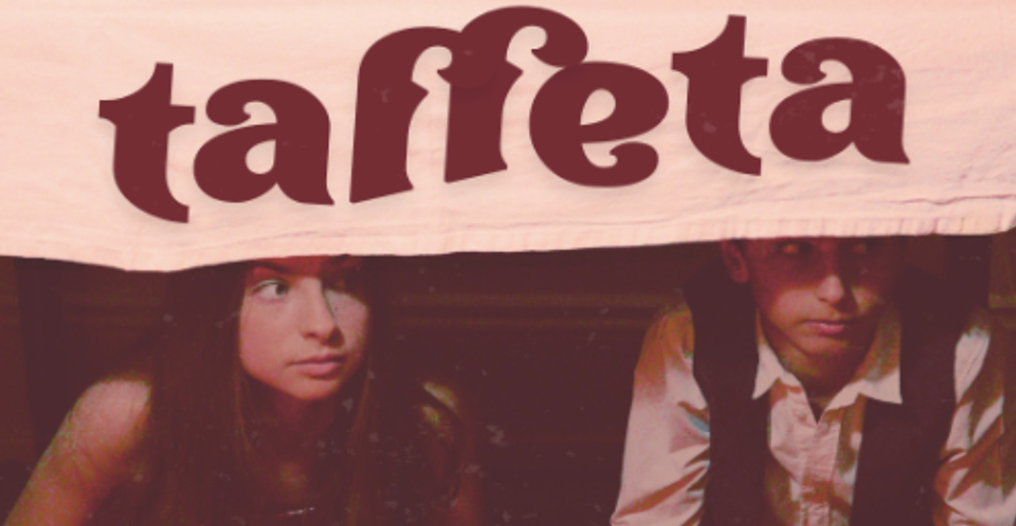
From the press release: Elucid Ether is the solo project of Justin Dellicastelli, a versatile Sydney-based indie artist who crafts a captivating sound blending dreamy synth pop, quirky melodic flourishes with hints of dissonance… From infectious, off-kilter pop to dark, atmospheric soundscapes, Elucid Ether weaves drunkenly around the boundaries of instinct and tradition.
I’m curious about the name Elucid Ether. What does it mean to you, and how does that definition relate to your music?
When I was writing the first bunch of songs for this project I noticed that I’d used both these words multiple times – even though elucid isn’t a real word 🙂 My first thought was to change some of them, but I started considering why these words popped up again and again. I’m sure it was just a nothing coincidence but they began having significance to me and it just felt right.
This may be a post facto rationalisation, but a lot of my songs are in some way about people’s place in time and space. Being inside your own head and understanding or experiencing the world around you: your memories, your emotions, your instincts, your perception. Thinking about it now, I guess Elucid Ether has come to mean ‘making sense of the world outside your head’, or maybe ‘inside/outside’. To me anyway, ‘Inside/Outside’ is actually a pretty good title. Maybe I’ll write a song about that.
Elucid Ether is a solo project, but your music has a full-band sound. Are you playing everything on your recordings?
Nearly everything.
A mate of mine – David Galafassi – plays drums when real ones are in order and another mate – Zoran Licanin – plays guitar on some songs cos he’s awesome at it and has lots of cool pedals. I want to include my friends in the process but I’m also too controlling of my solo stuff to let them in too early when there’s still actual decisions to make 🙂 A bit selfish, but I guess that’s what solo projects are for? I’m much more collaborative in band environments, I promise.
What’s your writing and recording process?
I most often start with an idea formed in my head: chords, a melody or a bassline. Naps and pacing around are good for this. I put it together straight into Ableton, fiddle around and then one-take instruments, use mumbled placeholder vocals and a simple kick/snare with the rhythm I want. I try to work really fast with minimal revision. I find there’s a magic a song has when it’s first in your head that gets lost very quickly and can’t be recovered once you start bringing it to life.
I try to finish the songs basic structure, chords and melodies; imagining how it will sound when performed better and is polished. It’s better if I can get this done in a day or two. Then I can spend months refining and polishing on and off, rotating through a few songs at a time in this stage, but I always try not to go backwards. I want to trust my initial instincts as much as possible, not think too much, not hear it from outside perspectives. This is one approach you can’t really take in a collaborative project so I’ve made it a focus of Elucid Ether.
People have politely told me this approach has led to a little ‘sloppiness’ in the final songs, and they’re probably right, but it’s the cost of this approach I guess.
Your new song, “Taffeta,” has a strong 80s vibe that calls to mind INXS. What draws you to that era?
Yeah, this one did turn out pretty INXS-y. It wasn’t really deliberate but I think I did use them as a reference trying to get the snare sound. Lately I have been interested more in the way pop/rock songs were arranged in that period. New Wave and big budget pop stuff. I’m not sure why to be honest. Maybe because it’s not really a sound people often try to do with bed-room recording, which is essentially what I’ve been doing.
Does that one reflect the sound of your other songs, or do they each have their own vibes?
All the Elucid Ether songs have been pretty varied so far. This is the first one that sounds like this. I’ve been trying to avoid a particular sound in advance, trying to explore different approaches and letting the songs go where they will. I’m hoping to surprise myself by finding some commonality between them and narrowing the vibe gradually. It’s happening but slowly. I’m planning to produce a few songs in tandem next and see how similar they end up naturally.
Your press materials list Tom Waits as an influence. How is he present in your music?
Tom Waits is probably my all-time favourite artist and definitely one of the song writers I admire the most. I feel like a lot of his songs are so simple and well-crafted that they would be great in multiple styles. It seems like he writes a song and then experiments on the arrangement instead of writing and arranging together. This is the approach I try to take. I actually consider a song ‘finished’ when I have chords, melody and basic structure. From there I try it fast/slow, heavy/pretty, straight/psychedelic and see what clicks. I love messing around on piano with old jazz standards that I don’t know, just following the chords and trying different ways to play them. That’s all a bit off topic but I guess simple songs done weird is what I love about TW and something I try to do too.
Your press materials also state that your music “weaves drunkenly around the boundaries of instinct and tradition.” What does that mean, and how does your music accomplish this feat?
What I said about Tom Waits probably applies here too. I like traditionally crafted songs, with nice and interesting chord changes, counter-melodies, harmonies etc. but I also love weirdness in tone colour and instrumentation, some dissonance, abstract lyrics. I will swing between and mix the two perspectives but I rarely choose the balance deliberately, just follow my instincts and do what sounds good to me at the time.
Do you ever get a chance to play your music live?
Not these songs, no. A lot of them are going to have very different arrangements live and honestly I don’t even know which instrument I’ll play on most of them. I’m not actually in a huge hurry to put a band together and play shows yet because of this. I’ve tried most of them out with guys I play in other projects with, so I have some idea how it will work, but I think I’ll wait until I have the set I want to play written (and probably released) and then we’ll arrange them together into something cohesive. Sometime in 2026.
What’s on the horizon for you?
I have a pretty big backlog of ‘mostly finished’ songs so I’m planning to group 5 or 6 together that have a similar vibe and produce them together as an EP with a more unified sound. There’s a couple of different directions I could go so I just need to decide which one.
3 responses to “Elucid Isn’t a Real Word: A Conversation with Elucid Ether”
Justin Dellicastelli sounds intriguing – I like both “Signal Holiday” and “Taffeta.” I agree the latter has a very clear INXS vibe, not only the drums but also the funky guitar. Justin also has a great singing voice.
Frankly, I find it hard to notice “any sloppiness” in his songs – granted, I only listened to the two tracks you called out here.
I’m wondering whether Justin would noticeably sound different to your average music listener, if he took a bit more time with recording his music. I imagine it predominantly would be the “musician types” like yourself, who may pick up on it.
Sometimes, being spontaneous and not overthinking music can lead to great outcomes. Neil Young is a nice illustration, though I will add his approach has also led to uneven output. But when it works, it works really well for him!
Yeah, it’s tough to find that line between loose and sloppy — or between spontaneous and overwrought. I guess the real trick is figuring out how to make it sound easy, especially when it’s difficult!
‘Great observation,’ says the super-duper hobby musician who never wrote anything significant, which of course would be little me!😂 That said, your comment makes total sense to me!