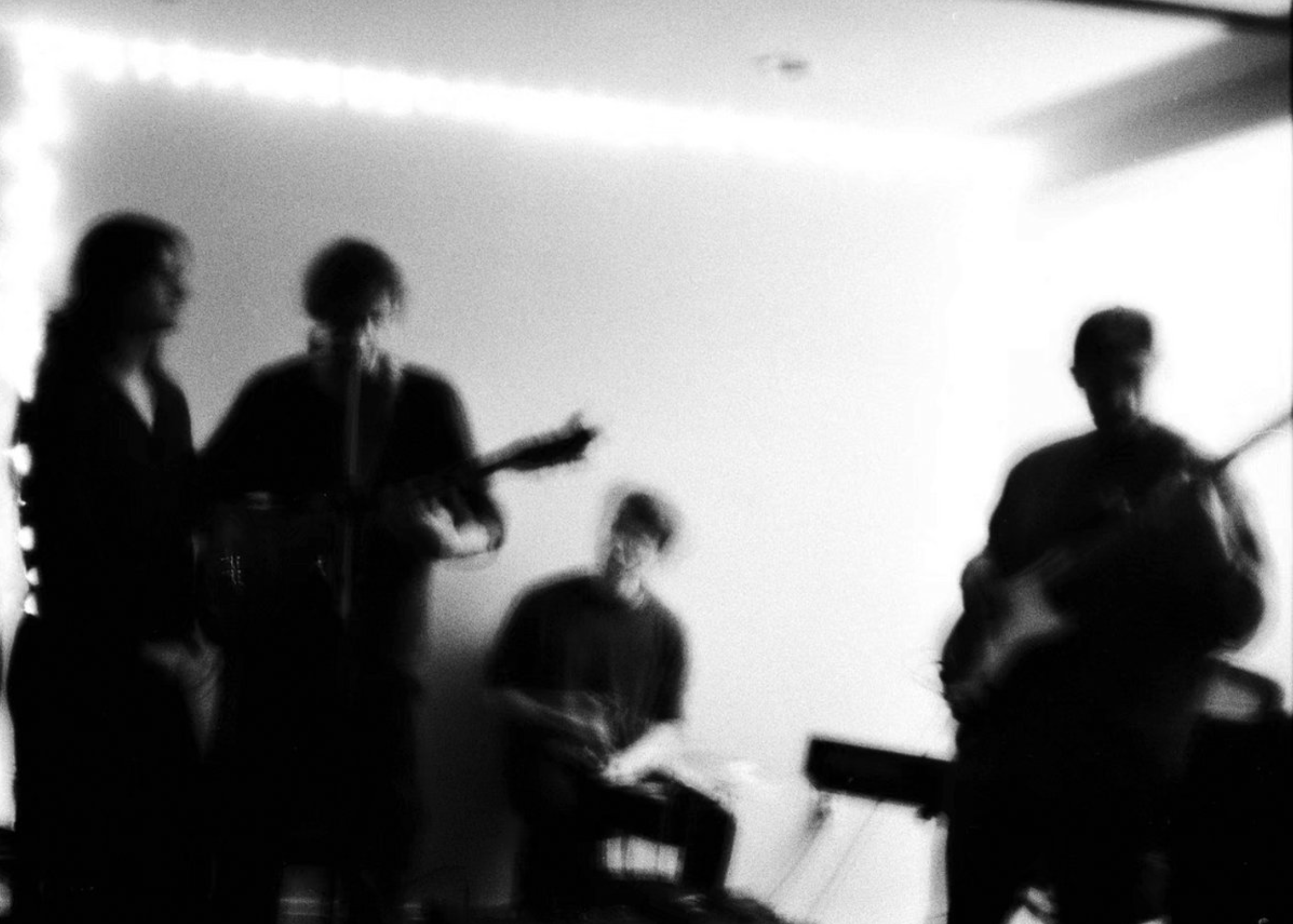
Dogwood Gap is a very cool Brooklyn-based DIY project fronted by Patrick Murray. As the interview below suggests, their music is both literate and engaging. Given my day job as an English Professor, I couldn’t help being drawn in by references to Ambrose Bierce and William Faulkner, so I reached out to them with some questions…
Cool band name! How did you come up with it, and what does it say about your music?
“Dogwood Gap” is actually a Songs: Ohia track from his self-titled debut album. Jason Molina has been a huge inspiration for me and my songwriting so the band name is in homage to his influence. Something Molina did so well was create incredibly vivid atmospheres; the same feeling as when you’re reading a great book and painting mental pictures of the imagery. When I’m working on a song I like to think up lyrics that will help the listener see what I see. I know we don’t always think of seeing music, and this isn’t any sort of synesthesia situation, but when I listen to music like Molina’s, it’s so good that I can just picture exactly what he’s playing about. Dogwood Gap tries to make this kind of music.
Probably Not Enough is your fourth release. How has the band evolved since its inception?
There’s been a handful of lineup changes over the past few years. I guess the last change before the current iteration was in 2024. We’d been playing the year as a five-piece with two guitars, but our bassist had to move to Baltimore for school. Instead of finding someone to replace him, we just switched Evan from second guitar to bass. The man has a way with strings––switching was super easy and it was nice to trim some fat. So now we’ve got Hayden on drums, Evan on bass (and cello on “Owl Bridge”), Carlie and myself singing, as well as my guitar.
I used to be someone who figured that the more pieces in a band, the more noise, the better the sound. But actually for Dogwood Gap, I think we were able to find some gold in the space that opened in the wake of a second guitar. We figured out how to be heavier and more intense in that cavern. I guess you could call it an echo.
What were some challenges of going from what was once ostensibly a solo project to working with a band?
The biggest difference, which I think was also the biggest challenge, was going from playing all of the instruments individually myself for the recording, to playing full takes as a band in the studio. As a producer, I had to give up a lot of the control that I’d had in previous releases for the sake of giving Probably Not Enough that stripped back, live quality. I think in a lot of ways, even though it’s louder and heavier, this album feels minimalist in comparison to Dogwood Gap solo stuff.
It’s ultimately turned out for the best, no questions asked.
What were some rewards?
For one, I’ve really done some work on myself to get rid of that knife blade of a perfectionist’s edge. And for two, it’s so awesome when we’re recording in the studio and I’m listening to Hayden or Evan playing, and I’m thinking I could never play that on drums or that bass line, I never would have thought of, and it’s what the song’s missing! On the whole, it’s been a lot more exciting being creative with a group, especially with three other people whose instincts you trust wholeheartedly. When we reach that point on a track recording where everyone agrees, “Yup, that’s the one,” we don’t even question the decision and move on to the next.
You’re part of the DIY scene in Brooklyn. How would you describe that scene, and how does it influence your approach to making music?
The music scene in Brooklyn right now is awesome. And maybe it’s just the bills we’re being put on, but it feels like a lot of bands (as opposed to one-wo/man singer-songwriters) that don’t all fit neatly into specific genres. I’m thinking the likes of Ditch, who don’t have anything recorded yet, Chris Sunshine Band, Sunshine Convention, all of whom have been playing sets that feel really inspiring to us. A little side note, Jake from Sunshine Convention just put on a wildly cool music festival in Brooklyn, Bazooka Fest, with sets from some of my favorite local bands. It was headlined by Elf Power, which was insanely cool.
I think if you were to listen to Winesburg or even the “House Sounds” EP back-to-back with Probably Not Enough, you’ll hear a huge difference in energy. Listening to so much live music this last year has inspired me to strive for that sound in the recording studio, rather than focusing so much on every single second of every single take being played to perfection. I want Dogwood Gap to sound like the sets it’s been playing, the bands it’s been playing with. In some words: Spontaneous but locked in.
Since you’re DIY, I’m curious how you feel about Spotify and other streaming services. How do they fit into your musical world?
Spotify feels like something of a necessary evil. I’m sure other small artists can relate. When you release music independently and gain access to your Spotify for Artists account, on the surface it’s seemingly filled with tools for growth and self-promotion, but then you remember that you’re making a fraction of a cent per stream. They even demonetized songs with less than 1,000 streams, so Spotify is probably about the least artist-friendly streaming service out there.
We’re always thinking of creative avenues to get fans to engage with our music in more meaningful ways. Last year we launched our own label, Revelator, where we focus on physical releases and doing sales the old fashioned way. In the last decade or so, vinyl has made somewhat of a comeback with the recent Rise of Retro. I think small labels and the artists they represent can kill two birds with one stone when it comes to physical releases: Make some moves away from the evil baggage of streaming services, and capitalize on music listeners’ gravitation towards tangible copies of the art they like.
Your press materials refer to the new album as “narrative informed by melody and composition.” Can you say a little more about that?
I think whether or not you’d call our music some kind of folk iteration, the band does have sort of folky origins. I grew up with a father who believes that “Dylan is God,” and the music I like to listen to, even the new stuff, finds its moorings in that word-of-mouth approach to songwriting. Our first album Winesburg was actually named for the Sherwood Anderson book of short stories, and was basically my attempt to recreate that anthology-style composition with songs about different characters all inhabiting the same folky universe which, at the time, we thought to call the fictional town of Dogwood Gap.
Now, the latest album being much more collaborative than that previous stuff, it’s still very much narratively driven. Take “The Beast,” for example, which is our drummer’s thought-up character, loosely autobiographical. When Hayden and I were workshopping that song, we thought there was something inherently funny and a little bit odd about the melody and chord progression. It reminded us of older operatic, kind of campy classic rock à la Meatloaf or even Frank Zappa. Hayden took this idea for his Beast character and totally ran with it based on how the instrumental made him feel. The result is a failed modern-day NYC love story that’s basically as outrageous as the tune it’s being sung over. We like to think most of our other songs are nicer to listen to than “The Beast,” but narratively and compositionally we take a similar approach during writing sessions.
Along those lines, the themes of your songs strike me as literary. “Honey Bees,” for example, was inspired by a short story by Joanna Scott, and “Owl Bridge” calls to mind “An Occurrence at Owl Creek Bridge” by Ambrose Bierce. Wherefore the literate bent?
You totally nailed it! To make it even more meta, I was introduced to “Owl Creek Bridge” through an episode of Twilight Zone. There was a film rendition of Bierce’s short story that they aired on the show, it has an incredible soundtrack by Henri Lanoë too. I was debating whether or not to make the nod to Bierce when writing the song blurbs, and decided to leave it out for the literary listener to figure out themselves. I guess you’re our perfect audience!
At the end of the day, we’re a band of four literature, history, and film students. When the inspiration runs dry in our day-to-day lives, our natural inclination is to turn to that endless well they call the Canon. Especially since the majority of our songs are instrumental before they have words––rarely do I work in reverse. So if, let’s say, Carlie and I are at home listening to a recorded jam from last Thursday, it’s likely to snag some memory of a book we read or some imagined idea about a character or story arc. Sometimes it’s more obvious, like in “Owl Bridge,” and other times the rope is less fixed to the wharf. Take “Red Ribbon,” for example, which is Carlie’s song about time running out faster than you’d maybe like it to. Unless you’re a total Faulkner nut, you might miss that the red ribbon of it all calls back to a metaphor in As I Lay Dying, and a lot of the imagery about mothers, fish, and Furies in the attic comes from having that book back of mind while songwriting.
You’ve mentioned that live performance is the bedrock of your sound. Why is that?
We play a lot of shows, or at least what feels like a lot––sometimes a couple in a month somewhere in Brooklyn or Manhattan. It’s where we have the chance to try out a lot of our songs on big sound systems. When we’re recording, it’s in a small studio where we can only hear each other through the headphones, and when we’re rehearsing it’s usually in a rented room with shoddy mics and amps (no shade to our rehearsal spot––we love you). So when we play live, it’s kind of the only time we have to really work out the kinks.
I’d say the best example of this is “Face Off,” especially that last bit with the call-and-response between drums and bass. This part was basically impossible to nail completely in rehearsal without the ability to really hear how Evan and Hayden would sound going back and forth. I think it was at an Arlene’s Grocery show in the Lower East Side that we finally nailed that part for the first time; We all kind of looked at each other like Hell yeah, that’s how it’s meant to sound, and so when we got around to recording it we did our best to mimic what we’d figured out while playing live.
And what’s on the horizon for you?
I think what Dogwood Gap is really itching for these days is to find its people. We’re in a good spot right now with the four of us where we all really believe in the potential of this band and we’re really excited about the way Probably Not Enough came out. Over the last couple of years we’ve been lucky enough to see the audience at our shows grow, but the faces in the crowd are still pretty familiar. We’re hoping that this year we’ll start seeing some new heads out there.
Perhaps what’s more within our control is to play more shows outside of NYC. This last spring we were invited to a gig with some friends in Somerville outside of Boston. It was a blast to be “on the road,” even if just for an afternoon. I think there’s a really strong possibility that New England will see a Revelator Records tour in 2026, with Dogwood Gap, Sockeye, Simple Son, and whatever local bands we can get on the bill for a couple of weeks from Vermont to Virginia. Maybe a tour isn’t a horizon thing, because I think we can reach it.
7 responses to “I Guess You Could Call It an Echo: Chatting with Dogwood Gap”
It always adds a neat layer of context when you can tie back something like the lyrics to a particular author you are familiar with
Definitely!
Thanks, Marc, Dogwood Gap sound intriguing. I checked out the two songs from their forthcoming album “Probably Not Enough,” which in addition to “Stains” includes “Mother Has Closed Her Eyes.” I’ve added the album for consideration for my Nov 15 new music review.
Cool! As you can imagine, their literary allusions and DIY approach to music appeal to me greatly!
[…] I Guess You Could Call It an Echo: Chatting with Dogwood Gap […]
Terrific work, these guys sound interesting!
I agree! I’d love to see them perform live sometime!