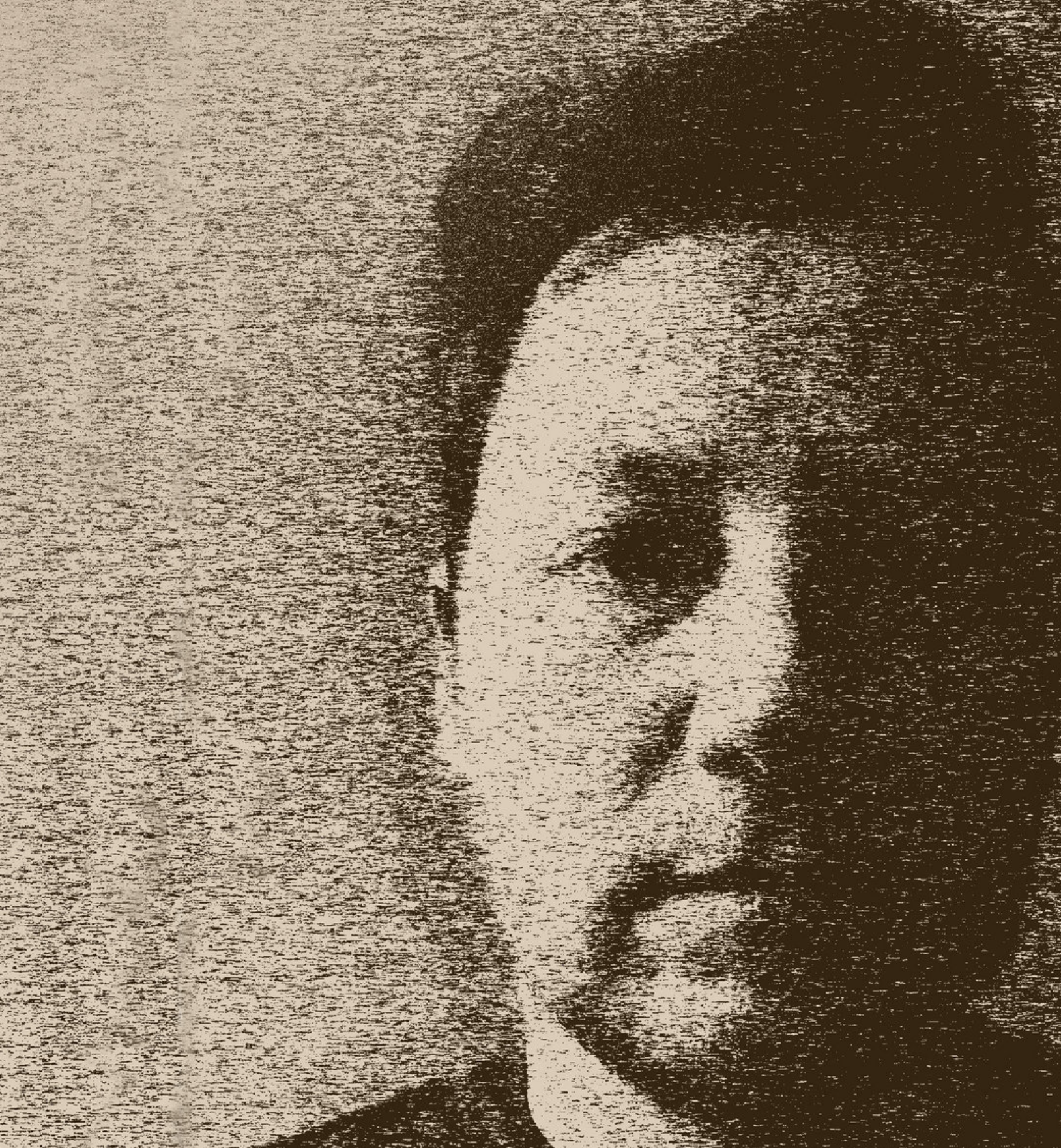
I had the good fortune of seeing Scott Radway play at the legendary Rusty Nail a little while back and was immediately struck by the his band’s sound: echoes of Pink Floyd with a jazzy edge. We chatted briefly after his set, and I made a point of buying his album on vinyl. Then we ran into each other the following evening at a Dear Forbidden show in Swarthmore, PA, at Warehouse3. (More on that one in a future post!) As is the case with pretty much all of the musicians I’ve met from the Philadelphia scene, Scott is an incredibly friendly guy who’s more than willing to chat about his music and other creative endeavors…
When I saw you play at the Rusty Nail a little while back, we chatted a bit about your history in the Philadelphia music scene. You mentioned that you went away for a while and that when you came back, a lot had changed, at least in terms of your old contacts. Can you talk a little bit about your early years in the scene?
In college I was trying to lead a double existence as a drummer and classical composer. Actually make that a triple: I was also playing keyboards in a cover band—a band who, admittedly, deserved a much better keyboard player. As far as original music went, I was playing drums in a prog metal band called Divided Sky and generally living by the musical ethos of ‘anything worth doing is worth overdoing’. Later, having fallen out of love with prog metal, I knew I wanted to lead my own group and play quirkier music, so I formed Now Soon Nowhere, where I switched to keys and tried to smash every style of music I could think of into the collective stew while still banging my head a lot. I was writing, booking shows, recording and promoting all the time, on top of my day job. I wish I had that kind of energy nowadays. I really believed in what we were doing, even if part of our M.O. was to see how weird our songs could get and still hold an audience. I’m not sure people really got us, but we had fun.
What took you away from Philadelphia?
I started touring a lot with bands from other parts of the country—Tub Ring from Chicago and then Polkadot Cadaver from Baltimore. So while my homebase was still Philly, I wasn’t actually there very much except in between tours. But the thing that finally caused me to up and move across the country was a long-distance relationship that had formed when I was on the road. I know, I can practically hear the skeptical choir of winched eyebrows. All I can say is it felt like a bold move at the time, and that was the kind of energy I was trying to inject into my life as someone who was habitually risk-avoidant. Suffice it to say this particular decision didn’t pan out the way I’d hoped.
What brought you back?
The end of the relationship, although I think now that my moving back was inevitable, given how things were going. There was a year or so after it ended where I stayed put in order to see if that was a place where it made geographic sense for me to be. I met some great people and got to play for a short while in a Beatles tribute band, which I really loved, but my endeavors with original music had taken such a backseat that I no longer knew who I was or what I was doing anymore. So I came back home to Philly where I felt I could make more things happen, where there was a scene to get immersed in, and where I was generally more inspired.
What’s changed over the years?
Well, almost every live music venue, for one thing! So many of the places I’d known and played before were shut down, or changed names, and the few that remained were all under different management. Ditto for the circle of bands I’d been close with—most of them had disbanded, and many of my favorite musicians weren’t even in the area anymore. But the biggest change was me. I was older and, to be honest, tired all the time. I thought I’d come back and get right to it like I did in my twenties, but now I was nearing forty and my body and mind weren’t responding to it all the way they once had. There was a definite period of re-acclimation. In this case I think having a new partner who was already plugged into the music scene and still had that enthusiasm for the rigors of running an original band was a huge help – I credit her immensely with helping me get back into the swing of things when being cranky had become so comfortable.
What did being involved with bands like Polkadot Cadaver and Tub Ring teach you about being a bandleader?
I was a longtime fan of both of those bands prior to playing with them, so there was certainly an element of the whole ‘don’t meet your idols’ thing in the back of my mind. In terms of success they were both next level from where I was with my bands, so I just wanted to learn everything I could from them, see how other people did things, etc. And for the most part they were very positive experiences. I certainly witnessed some really fucked up behavior on the road, but most of that was from other bands we toured with, and I was thankful to be in a situation with people who had their personal and professional shit together. Even better, I earned their respect enough to be able to contribute from a writing standpoint, which was the thing I wanted most. Both bands were run in a fairly democratic style, so I was lucky not to have to deal with the massive power struggles I saw others going through, and it was refreshing to confirm that a group couldachieve a certain degree of success without having to be assholes to get there. We would witness so much of that sort of thing from afar and it was extremely disheartening … some of those bands, I have no idea how they functioned at all. I would have lasted a couple days at best.
And now, in addition to your solo project, you’re also in Lo-Priestess with your wife Gina LC. How is the music you release under your own name different from the music of Lo-Priestess?
My music has become a lot more poppy over the years, whereas Lo-Priestess is generally mellow and groove-oriented. Lo-P actually came together based off a single song I had written for a film score years earlier. I met Gina at a show we were both booked on, and I loved her voice, so I asked her to sing on it, even though the film’s director ultimately opted for an instrumental version since it would lay underneath dialogue. So I had this completed song that was unlike anything else I’d written, and it was just sitting around unused. When I came back to Philly we decided we wanted to do something with it, which would of course necessitate writing more songs. But whatever this new project was going to be, it had to be different from anything either of us were already doing on our own. That was really important. So we recorded and released a short album, just Gina and myself. But it was once we started filling out the live band that the musical identity really began to coalesce. I can’t speak for Gina’s thought process with this, but for me it started to become easier to spot early on when a song was a “Scott song” or a “Lo-P song”. It isn’t an exact science, though, and there are still some of those babies hanging onto the wall, waiting to see which team is going to pick them.
What’s it like to be in a band with your spouse? Does it ever pose any challenges?
Honestly it’s nothing but challenges. Mostly logistical ones, given that we have a child who takes up the majority of our attention, but sometimes there are artistic ones, too. Gina’s a little more go-with-the-flow with those sorts of things, whereas I’m impossibly picky about every step of the artistic process. I admit this. She puts up with a lot. But the biggest challenge, the constant struggle, is that of time. We can’t both be working on our art at the same time, because someone needs to be watching our daughter. So we accomplish a lot of the work as a sort of relay race—I’ll work on, say, the production of a song, then hand it off to her and she’ll finish the lyrics, or work out some other aspect of the songs, the artwork, the show promotions, etc. But in an ideal world, I would really love to be sitting down and working on these things together. Maybe one day.
You’re also a music producer who’s worked with artists like Dear Forbidden, Erin Fox, and Rescue Pets. What’s your approach to production? Do you have an over-arching philosophy that informs how you work with other artists?
It really depends. I may receive a track already fully recorded and I just have to mix it. Sometimes an artist might ask me to add a little something that they weren’t able to record themselves, maybe some keyboard textures or strings. Due to my limited space and noise restrictions I can’t really record bands myself, so a lot of my recent work has been with solo artists, where we’ll create the recordings from the ground up with a combination of live and virtual instruments. Part of me is very much in the ‘organic’ realm, so even when we’re doing virtual parts I still prefer to physically perform them, even if it’s through a keyboard, rather than putting notes on a grid. I just feel like having that little extra bit of the human element is important.
I also recognize that some people are coming to me more because I’m affordable than because of any sort of artistic vision, and that’s fine. In my own works I often lean into densely orchestrated sound. I like making music where you might hear something new each time you listen, some little sound or backing vocal you missed before. But not everyone is looking for that, so obviously I’m catering the approach to the situation.
I love your most recent album, Poppies, and was surprised to learn that it actually came out a little while ago. You were telling me that you experienced a setback with the album release party, so it didn’t get the full treatment you were planning on. Can you talk a little bit about that? How did it affect you as a musician, and how did you recover?
Historically I’m a bit of a slacker when it comes to actually promoting my music—all of my good ideas tend to come during the creation process, less so with the public side of it. But with Poppies I was finally ready to buckle down and do the thing. There were also a few weeks of nailbiting wondering whether the vinyl would arrive in time. And then mere days before the release show the venue closed down and I couldn’t find another place in time that would host the lineup. So it was a bit deflating, and the release still happened online, but it wasn’t nearly as exciting as a proper release show would have been. After that things picked up with Lo-Priestess, and life in general, and the whole thing was put on the back burner until I could wrap my head around it again.
But the approach I had planned for it was something I’d wanted to do for awhile, which is to have the live band concentrate on the more uptempo, more fun stuff I’d been writing. Some of the somber material from the other albums was fun to make, but I didn’t always love performing it, or it didn’t feel like it was translating, whereas stuff from albums like All Stations and Poppiesgot me excited, made me want to tap my foot, nod my head, etc. I figured if it’s making me feel that way, maybe it would connect more with crowds, too. I also liked the idea of a sort of perpetual motion set, barely stopping between songs, except for a few well-timed breathers, both for us and the audience. I mean, banter has its time and place, but it can also seriously derail momentum when it’s excessive—at least I think so. In fact, to refer back to something we talked about earlier, that is definitely something I picked up from my time with Tub Ring and Polkadot Cadaver, the idea of keeping things moving.
The album comes with a short story that’s printed on a postcard. How does that story relate to the music?
I spent much of the early days of COVID at a relative’s house in New England, and there are these neighborhoods nearby with these lavish properties set far back from the road, real oceanside grandeur sort of places. And I started to think about those rich people you hear about who, for whatever reason, essentially become hermits, almost prisoners behind their own gates. Of course with COVID going on we were all experiencing that to a degree, just not on a grand scale like some of these people. So a storyline started forming about what sorts of things might be going on behind those gates, and before I knew it, half of the Poppies album became roughly organized around this concept. Those songs became something more like a song cycle than a concept album, since the other half of the album is unrelated. And the pieces of the song cycle don’t appear sequentially or back to back, and they aren’t highlighted in obvious ways, but there are subtle clues in the artwork as to which songs are part of it. The songs are told from various points of view, and the accompanying chapter that’s on the postcard happens to be narrated by an inanimate object.
It was an extension of what I did for Sunsetter, which was a loose concept album with an accompanying story. I thought it was a cool thing to include for people who, like me, still appreciate physical albums. So Sunsetter had the short story inside the booklet. With Poppies I made the short story a separate thing that I manually placed inside the vinyl jacket, and I didn’t really even advertise that it was there. It’s a little trinket for fans, like “hey, what’s this extra thing in here?”
And you write fiction as well. How would you describe your fiction writing, and how does fiction inform your approach to music?
I haven’t nailed this yet in my own writing, but I love when authors refuse to spoonfeed you, giving just enough contextual clues to at least partially assemble a picture of what’s going on. I like the ambiguity, as long as it’s purposeful and there is something underneath worth deciphering, even if it’s still open to interpretation.
I’ve never thought about a correlation between my writing-writing and my music-writing, except maybe in how I approach lyrics. But now that I’m thinking about it, that might explain why so much of my production style is about density, where you get the main song to work through upon first and second listen, but then with each new listen you might discover more things happening underneath. Huh… I never made that connection until you asked, thanks!
What’s on the horizon for you?
There are a few mixing/producing projects freshly out or almost out, including the new Dear Forbidden self-titled record, as well as the upcoming Erin Fox record. In terms of my own stuff, we have a new Lo-Priestess record fully-written and half-recorded, so that’s probably the first thing that will see the light of day. I’m also continuing work on two new albums under my name—both are entirely written and demoed, and I’m gradually working some of that material into the live band’s set in the hopes of those albums being more of a group affair rather than me doing most of the instruments the way I did in the past.
6 responses to “A Definite Period of Re-Acclimation: Chatting with Scott Radway”
Scott’s quite an interesting and busy man, and I love when people we interview put forth the effort and time to provide lengthy and detailed responses to our questions. Makes for a much better interview, especially when you always ask such great questions, Marc. I’m really liking his music, songwriting and vocals too!
I agree about the detailed responses. And it’s funny because artists often apologize for giving long replies. I always tell them not to worry about it. The more detail, the better! And, yeah, Scott’s music is great!
I have to second Jeff here, Marc. It’s quite an insightful interview, with Scott Radway providing a remarkable level of detail what goes into the making of his music. And, yep, he seems to be pretty busy and juggling all of that with a wife and a daughter certainly does not look easy. I guess it’s a good thing Scott’s wife also is a music artist and collaborator, so “she gets it.”
I’ve sampled the first few tracks of Radway’s “Poppies” album and like what I’ve heard this far. I like his melodic style.
And his live show is great as well! He and his band do an excellent job of bringing the record to life!
Really enjoyed this conversation. Thank you, Marc!
Glad you enjoyed it!