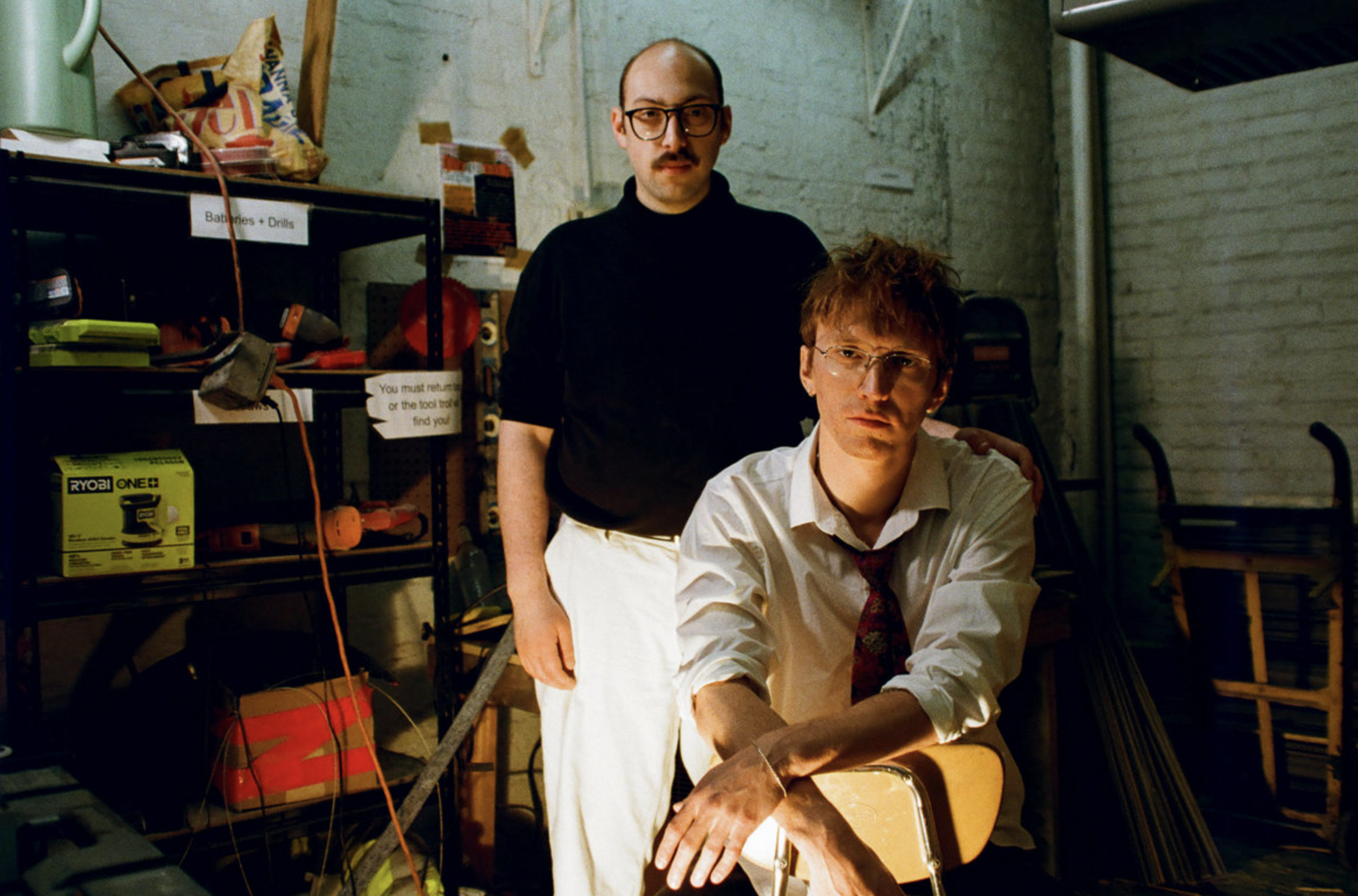
When Henry Caughey of Audiostar reached out for an interview, the link he sent took me to what he later revealed to be a “burner” Soundcloud account labeled “Dr. Miss Doctor” — hence the first question below! The cloak-and-dagger nature of my introduction to his project, which is actually called Audiostar, notwithstanding, the music demands to be heard!
Dr. Miss Doctor is a cool band name! How does it reflect your music?
Our band is actually called “Audiostar” . I just put the EP up on a burner soundcloud so we could share it around prior to release. I probably should change that soundcloud to make it more official lol.
Who’s in the band? Has anyone been involved with other bands in the past?
The band is myself (Henry) and my longtime friend and creative-other-half Will Gillman. We’ve both played in a ton of bands over the years, myself in Adios Mio, Every Notion, Weak Teeth, and a bunch of other projects over the years.Will most notably was in a band called Rattleshake for years, and more recently a band called Best End, along with others over the years.
This project (and all our music) is recorded in tandem with a wide array of friends in our local Brooklyn community.
What does everyone bring to the table in terms of both musicianship and personality? What’s the chemistry among band members?
Will and I write and produce everything together for the moment, and are looking to bring more permanent members in as our live shows progress and build more steam. It’s a true give and take, and both of us are focused on being friends first as our method of creating. We’re both also sound engineers and produce for other local bands from our tiny BK studio.
Your new EP is called Whatever Happened to Slow Dancin. How does your music attempt to find an answer to that question?
The question is posed twice, first as the title of the project, and later as the final lyrics on the final song (slow slow dancin). We had the title as an idea before the writing process for the songs had really begun, and chipped away at its meaning throughout the writing process. Ultimately, we don’t feel the need to answer the question for the audience. It should be up to the listener to divine what it means (or doesn’t mean) through the context of the songs.
I’m struck by the dynamics of your songs. The lead single, “Fishbowl,” builds gradually and falls into a nice ebb and flow. Who are some of your musical inspirations?
Will and I are both avid fans of bands like Yo La Tengo, Arthur Russel, Wilco, Wednesday, Friendship, Camero WInter/ Geese, Teen Suicide, and Sonic Youth to name a few.
Did you work with a produce on the EP, or is it self-produced?
We self produced, but we were constantly bringing in other musicians, producers, and creative friends to help with shaping both the sound and our approach to the project as a whole. We couldn’t have made this project without a loooong list of incredible artists and friends in our community.
You’ve mentioned that Whatever Happened to Slow Dancin is rooted in themes of being in your 20s, spiritual existentialism, nostalgia for youth, and the subversion of its simplicity. Do you mind if we break those down a bit? Are you in your 20s now? What is it about this decade of your life that makes it particularly ripe for musical and lyrical exploration?
I’m 29, Will is 27. We’ve both played in a lot of bands that wanted to play music for what (to us) felt like the wrong reasons. Whether that be fame, looking cool socially, or any number of other ego driven hangups.
When we met each other after college, we both realized that our philosophies of creating lined up. The word I come back to a lot in our process is “artless” or without guile. We make music because we have to, and we wanted to build something sustainable that could be a home to us for a lifetime. Building a home rather than a rocket.
Being at the end of our 20s is weird as a musician, so many of our peers have notions that once you hit 30, your chances of “making it” are over, and neither of us really ascribe to that line of thinking. We just love making music and would rather not define our successes by any external metric.
The themes on the record are really an exploration of where we’re at as people right now. Settling into being “adults” but also having no clue what that’s supposed to mean. Wanting for “simpler times” despite the fact that both of us grew up in strange and stressful circumstances and things have never really been simple.
What about spiritual existentialism? What does that phrase mean to you, and how does it apply to your songs?
As a queer and rebellious kid from a small town, who grew up in a very religious family, leaving home, seeing shows, and going to clubs for the first time was the first place I experienced a higher power.
I think a big part of why I make music and this project as a whole is to explore this feeling. How the soul exists in a room of people, and how a live music experience can bring people together on a level beyond the physical space and the bodies we inhabit.
The framework of spiritual existentialism in regard to our music is the exploration of the larger concepts of the soul, the body, broader society,and the way we exist as human beings. Going beyond organized religion to scratch at the space outside of time, if only for the length of a song or a performance.
Then there’s nostalgia for youth and the subversion of its simplicity. Is that to suggest that youth isn’t as simple as it might seem?
Not that youth isn’t as simple as it seems, but that nostalgia is usually viewed through rose colored glasses. Sometimes it feels easier to envy ignorance, but acknowledging that the past is just a warping image that can play tricks on you feels closer to reality or truth.
Now that the EP is out, what’s on the horizon for you?
The EP officially releases on Nov. 7th and we have some local shows lined up over the next couple months! Also trying to plan out a micro east coast tour if we can get the finances in order.
4 responses to “How the Soul Exists in a Room Full of People: An Interview with Henry Caughey of Audiostar”
I always have time for queer artists, and Henry Caughey appears to be a thoughtful, grounded and talented guy. I’m liking Audiostar’s music, which to my ears has shades of Oasis and Sonic Youth.
That Oasis connection is one I hadn’t thought of, but I can definitely hear it now that you mention it!
While Audiostar’s songs don’t have easy-to-remember hummable melodic hooks, I still find their music intriguing. After sampling all of the tracks, I think my favorite is the closer – it’s quite an opus! I also have to agree with you “Fishbowl” has some interesting changes in dynamic.
Yeah, “Fishbowl” really builds!