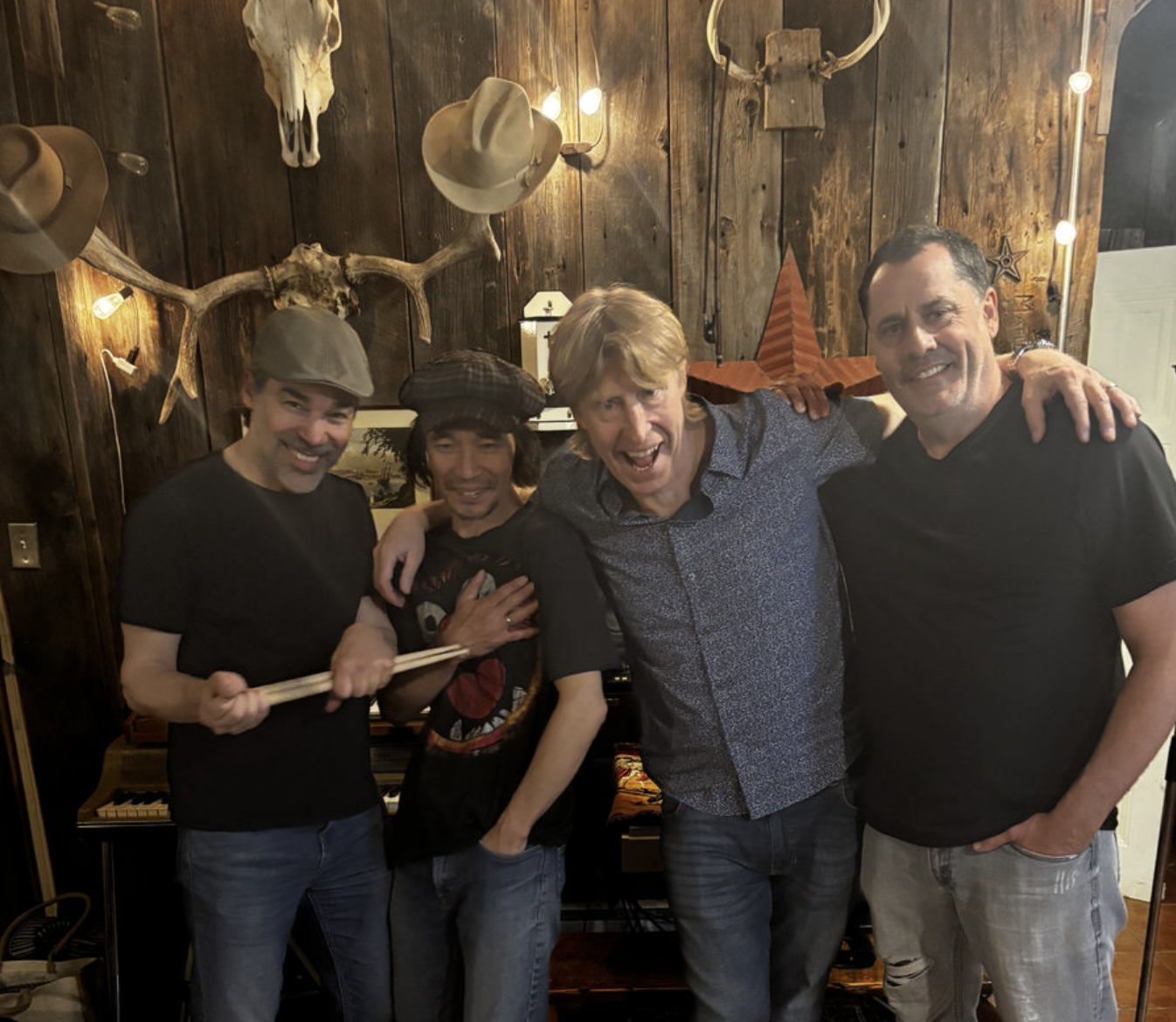
A dreamer, a singer, a songwriter; mixing his own special blend of rock, folk, country, and roots with the occasional splash of psychedelia. Singer-songwriter Eric Brombacher and his band Eric & The Soo having been making music in Toronto, Canada since 2015. Supported by five full length albums and numerous single releases, the band has graced many a stage and barroom in Toronto, with the occasional performance in Sault Ste. Marie, and even a few solo shows in Eric’s ancestral homeland of Germany. The past few years have seen the release of numerous singles, including “Great Northern Road,” “Picture,” and the pandemic-inspired “She’s Older Than Me.” Eric & The Soo are now proud to present their 2026 album release, “Phoenix”, recorded in Toronto at the renowned Lincoln County Social Club.
Your new album is called Phoenix. Do you feel like you’re rising from the ashes in some way?
Yes, very much so, in fact I feel stronger and more confident than I ever have as a musician, and as an artist. I’ve been doing this for 20 years, and I’ve always felt insecure about myself as an artist, and how and where I fit into the ‘scene’ or the perhaps the broader cultural landscape. Some of that relates to my own skills as a writer/composer and as singer & instrumentalist; I consider myself ‘capable’, but I am also surrounded by (and fortunate to work with) people that are far more experienced at their craft, so it’s hard not to be intimidated by that. I also have struggled with my general acceptance, and perhaps ‘relevance’ as an artist. I think these are common insecurities that perhaps other artists have faced, and somehow, someway, I’ve been able to rise above that. And perhaps that comes from my decision to focus on the art, and the creation, and to put far less focus on promotion (and social media activity). I can control the quality of that which I create, but I cannot control how it is received, so I have chosen to focus on the creation. So perhaps I’m a Phoenix, rising from the ashes of self doubt.
Along those line, I’m loving the funky vibe of “Starting Over (Ain’t That Hard).” I’m also struck by the theme of going down the wrong path for the sake of pleasing other people — or maybe for the sake of chasing followers or streams or any other number of metrics that artists might be tempted to measure themselves by. Do you ever find yourself falling into that trap? How do you stay true to your own artistic vision?
The song is largely about staying true to yourself in the face of outside pressure. I’ve caught myself doing things to please other people for the sake getting a project off the ground, only for that behaviour to end in the bastardization, or near-destruction of said project. And as a result of that, both in my music and corporate career, I’ve had to walk away from projects and people in order to stay true to myself, and choose my own dreams. As part of this process, I’ve had to reinvent myself, and start over, on numerous occasions.
And “Starting Over” is definitely intimidating, and sure it’s hard, but it’s not so hard that it’s worth staying in a bad situation. Your insight in relating this to chasing followers and streams is insightful, and in fact, very often where I’ve come into conflict with people is when they have different foundational goals than mine. It’s tempting to chase fame, or adulation (aka streams, likes, and followers), but I want to chase the art, and that’s not always easy. Back to the “Phoenix” theme, I think part of my new found confidence is that, through a lot of deliberate and conscious effort, I’ve managed to put together a team (band) where all members or on the same page, both artistically and philosophically. And yes, I also love the funky groove of this song (shout out to our fabulous rhythm section of Jon and Dino!).
You wrote most of the songs on the album yourself, but you cowrote the second track, “Time Hasn’t Changed,” with bassist Jon Ferguson. How did that one come about?
This is an interesting song in that it very much describes its own genesis. Jon lives in my hometown of Sault Ste. Marie, Ontario (aka ‘The Soo’), and we go way back to our high school days, and we even ran a successful summer business together when we were both in university. Jon and I lost touch for about 20 years, and although we never really played music together when we were young, we both forged our own independent musical paths, and that musical connection brought us back together a little over 8 years ago. So a couple of years into our re-connection, we decided to start a little side project called Kadelburg. The first song we wrote and recorded together (in Jon’s garage) was “Time Hasn’t Changed” and it very literally describes our reconnection, with the opening line depicting the song’s own writing process “sitting on a barstool in my dirty old garage”. The song goes on to celebrate overarching themes of nostalgia, youth, and most importantly friendship, and the timeless joy of reconnecting with old friends. Kadelburg is very much a garage band, and the original recording, though immensely charming, is somewhat unpolished, and stripped down. It’s a song that always gets a good response in our live shows, and with Jon now part of the Eric & The Soo family, it made sense to record a more polished version with a full band.
The album ends with a cover of “Handbags & Gladrags,” which I mainly know from the closing credits on the British version of The Office. What attracted to you that tune?
In general when choosing cover songs for my live shows, I’m drawn to album cuts, and songs that are a little off the beaten path. And this is one of those songs; it was orginially written by Mike D’Abo (who later went on to become the lead singer for Manfred Mann’s Earth Band), but the version I grew up with was from Rod Stewart’s debut album released in 1969. So back in 2015, when I first launched Eric & The Soo, this was a staple of our live set, and I really enjoyed singing it, and it always got a great audience response. As time wore on, the song quietly fell of the set list, and I kind of forgot about it. Then one day about a year and a half ago, I’m jamming with our drummer Dino, and we decided to try “Handbags & Gladrags” after not having played in over 7 years. And wow! It just clicked, and we were in the early phases of developing what would become the Phoenix record, and we both agreed, ‘hey that felt great, we should record this’. And so we did.
Your bio describes your music as including, among other things, “the occasional splash of psychedelia. I feel like psychedelia can cover a wide range of sounds. What does it mean to you, and how does it come into play on Phoenix?
I do like to add a splash of psychedelia when the shoe fits, and you can hear that on albums like “Modern Dystopia” or songs like “It’s Ok To Be Beautiful”, or more recently “Easy Misery”. That being said, Phoenix is a fairly straight ahead rock album, somewhat intentionally, and I don’t think there are any splashes of psychedelia on this record. However, we still made some fun, experimental choices on the record (such as the bass & bongo solo on “Don’t Let It Get You Down”).
In addition to playing in Toronto, you’ve also done some solo shows in Germany. How did those shows come together, and how were you received?
I lived in Germany for about 5 years, and I took the opportunity to play some gigs while living there, and even performed a few sold out shows at a regional concert hall. I was very well received and it was a fantastic experience. I got those gigs simply by writing emails and knocking on doors. When you’re new kid in town, it is a little easier to get people’s attention, plus the venues were able to bill me as ‘an international artist’ which has a certain caché. Because I didn’t know any local musicians, I was forced to perform solo, which was very good for me, and proved as a great training ground to hone my skills as a singer, and as a performer in general.
You recorded Phoenix at a studio called Lincoln County Social Club. What drew you to that particular studio?
Lincoln County Social Club is owned by Canadian musician John Dinsmore. John is a renowned bass player, known for his work with bands like NQ Arbuckle, The Skydiggers, and many more. He’s also a renowned recording engineer and producer. He’s even got some gold records on the wall, some for his work as a bassist, and some of which were recorded at Lincoln County Social Club. I enjoy working with John because he’s incredibly knowledgeable, and he works very fast and efficiently, he also has an incredible ear, and musical sense. His speed and capabilities, kind of match my frantic and fast paced energy, which helps us get the job done quickly, thereby keeping costs down, and his musical and technical sense are a huge part of what helps get the songs sounding as good as they do.
I noticed that the album credits say that the album was recorded, engineered, and mixed by John Dinsmore and that you produced it. What did John bring to the table, and how did you work together as a producer and engineer?
I think the best way to answer this is to describe my production process. I self-produce primarily for budgetary reasons; I would love to work with a producer, because it is scary and stressful having to do this on my own, and haveing to make all of these decisions on my own. Having a seasoned veteran coach me through the process, and guide my decision making, would be great, and would be great learning experience.
That said, I’m on my own, and I’m forced to wear many hats, and manage through the process myself. I’ve learned a lot by self-producing, and I’ve honed my process with each song and record that I’ve produced, but it’s taken me about 15 years, and lots of trial and error to finally get it right. I learned a few things making this album, and I’ll apply those lessons to the next project when the time comes. The first step in producing a song, is to write the lyrics, and the basic chord structure. After this step, I’ll take a first pass at arranging the structure and form of the song (for example, a typical song form might be verse-verse-chorus-solo-bridge-chorus).
Following that, I will jam the song out with my drummer Dino Naccarato, and he provides a lot of input as to the rhytmic feel and tempo of the song, as well providing feedback and tweaks to the arrangement. Once we have an agreed upon feel and arrangement, we will record a rough demo, with me singing, and playing acoustic guitar, and Dino banging away on the drums. I then share the demo with lead guitarist, Ken Yoshioka, and bassist, Jon Ferguson to allow them to rehearse, and develop their individual parts on their own time. This allows each member of the band to be creative and add their own voice and magic to the songs.
On the day of the session, John set up the drums, and amps, and all of the mics, and we spent some dialing in the sounds, and basic mix, and we recorded the album “live off the floor”. It’s definitely stressful, recording live off the floor, because you really have to be on your game, but I like doing it this way, because it brings a certain energy, and humanity to the final product. When recording, I’m isolated in the vocal booth, and I record acoustic guitar and vocals simultaneously, with the band out in the room performing live. We try to get everything done in no more than 3 takes, and we were all very well rehearsed, so that allowed us to cut 7 songs in a single day. So after that session, had 7 songs with bedtracks containing lead vocals, acoustic guitar, electric guitar, bass, and drums.
I took those bedtracks, or rather the ‘stems’ home with me, and we recorded overdubs for backing vocals, percussion, keyboards, piano, violin, and additional guitars at our respective home studios. After this comes the editing phase, were parts are edited and tweaked so that everything has room to shine as needed. And when that’s all done, I send everything back to John Dinsmore, and he adds his incredible magic through his own mixing process. I send him a lump of coal, and he spits back a diamond. John really gets our sound, and he knows how to make our songs shine, and I’m grateful for that. And for the final phase, mastering, I ship the final mixes to a local guy named Jeff “Fedge” Elliott who is also a wizard, and he adds that final element of polish elevating the songs to the form that they are in today. I am truly grateful to be able to work with such a talented crew of people.
Do you have any plans to promote the new album with live shows?
I love playing live, but truth be told, I’m having a harder time attracting an audience these days, so I have largely shifted my focus to writing, composing, and recording. I don’t have anything planned in the short term, but schedules permitting, I may try to do something in the summer.
What’s next for Eric and the Soo?
That’s a very good question, and truthfully I have no idea. Maybe I’ll just take it as it comes, and let the universe decide.