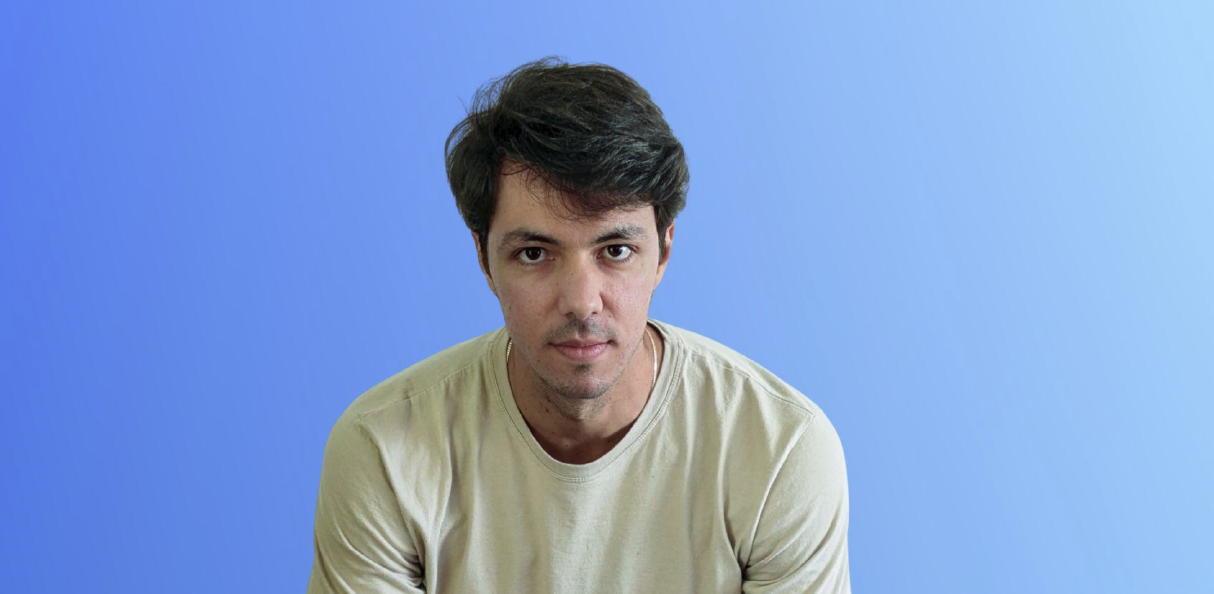
From the press kit: vja is a Los Angeles–based musician whose debut album Compartments blurs the boundaries between dream pop haze, neo-psychedelic color, and garage rock grit. Lyrically introspective and deeply felt, the album is a fevered search for meaning amidst the noise of modern life. Love, community, evolution, and authenticity collide in a frenzy of emotional catharsis—pulling listeners into a whirlwind of cosmic release and grounded rebellion.
How long have you been making music and what got you into it?
About 20 years. When I was in middle school my friends wanted to start a punk rock band and they needed a bassist. I wanted to be in the band so I bought a bass guitar and learned to play. A year or two later we released our first song on Myspace.
What does music bring to your life?
When I make music it brings a calm, private, safe space for me to be myself.
When I listen to music it also brings an opportunity to escape but into a world that the artist created. When I feel some connection to the music it might also provide a sense of belonging.
When I experience music live it also provides a sense of community when everyone is intentionally there to enjoy it and usually creates a nice positive environment.
Your debut album Compartments blurs the boundaries between dream pop haze, neo-psychedelic color, and garage rock. What draws you to each of those genres, and how do they show up in your music?
I’m not necessarily drawn to the genres themselves. I actually had to do a good amount of research to try to figure out what sub-genres of “indie rock” I might fit into. I’m curious if you think those are good representations since you’re probably more knowledgeable than I am at classifying music. I’m drawn to artists like The Strokes, Red Hot Chili Peppers, Coldplay, Tame Impala, Radiohead, Real Estate, Alvvays and I think some of those influences end up unintentionally coming out in my music.
Your press materials describe Compartments as “a fevered search for meaning amidst the noise of modern life.” I’m curious about “fevered.” What makes your search fevered?
I guess what I meant is that the “search” can be complex, tiring, a bit self-destructive/obsessive but I was determined to try to find words to describe what felt good and what felt not so good. I would lean into the good feelings as a guide during the “search” in hopes that would lead me to “meaning”, if that makes sense.
And “the noise of modern life” is interesting, too. Do you have any particular types of noise in mind?
I think in that sense noise is anything that’s pulling you away from yourself and your essence. It’s the little whispers that are luring you into something deep down you know you should do differently. “Bird” is about forgetting where you come from, losing humility, and getting lost in temptations. “Alan’s Run” is about societal pressures, fear of changing/creating your own path, caring too much about what others think. To be more concrete, I think a lot of noise comes from social media, pop culture, television
The album was mixed by William Carroll, who was an engineer on Weezer’s OK Human album. How did you connect with him?
I found him on SoundBetter.com, a platform I heard about from a singer I met here in Los Angeles. I was particularly looking for local engineers so we could collaborate in-person when needed. William’s experience seemed like a good match for what I was looking for so we got to work and I was very happy with how it turned out.
What did he bring to your mix?
He added clarity and balance to the mix. He made it so each instrument was able to sit in its appropriate frequency bands without competing with others. He also found some great sounds/effects that helped unify the songs in a way that made sense for them to all be part of the same album.
You’ve described your album as balancing polish with rawness and clarity with hazy. How did you strike that balance, and are there any places on the album where you think it’s particularly apparent?
Yea, that’s also another thing that William helped a lot with. There’s some heavier distortion in “Breaking Down” for example which sometimes can drown everything else out but I think we did a good job of keeping order in the chaos. In terms of haze, we utilized reverb quite a bit but I still wanted my vocals to be understood and come through. This was something I knew I wanted early on and referenced “Californiacation” by RHCP – a record where Anthony’s vocals are so clear. I basically wanted to add some color around the songs but make sure we weren’t adding too much.
Do you have any plans to take Compartments on the road for live shows?
I’m starting to work on some acoustic renditions of the songs so I could test them out at some local venues in LA and if all goes well I would certainly be happy to expand from there!
What’s on the horizon for you?
I worked on this record on my own which had its pros and cons. In a way I feel like I needed to work on it on my own to fully express myself. On the flip side, I sometimes spent too much time on one thing where a fresh set of ears could have helped. Moving forward, I feel like I want to collaborate more with others and see what happens. My favorite part is writing songs so if I could focus more on that and get contributors for the other parts, that’d be great. I’m not in a rush to start recording anything right away but I will continue making music and remain open to new ideas and opportunities to collaborate.
2 responses to “An Opportunity to Escape: Chatting with vja”
Interesting interview! Especially fascinating that so many credentialed professionals are on Soundbetter and available to work with indie musicians.
Yeah, that’s pretty amazing!